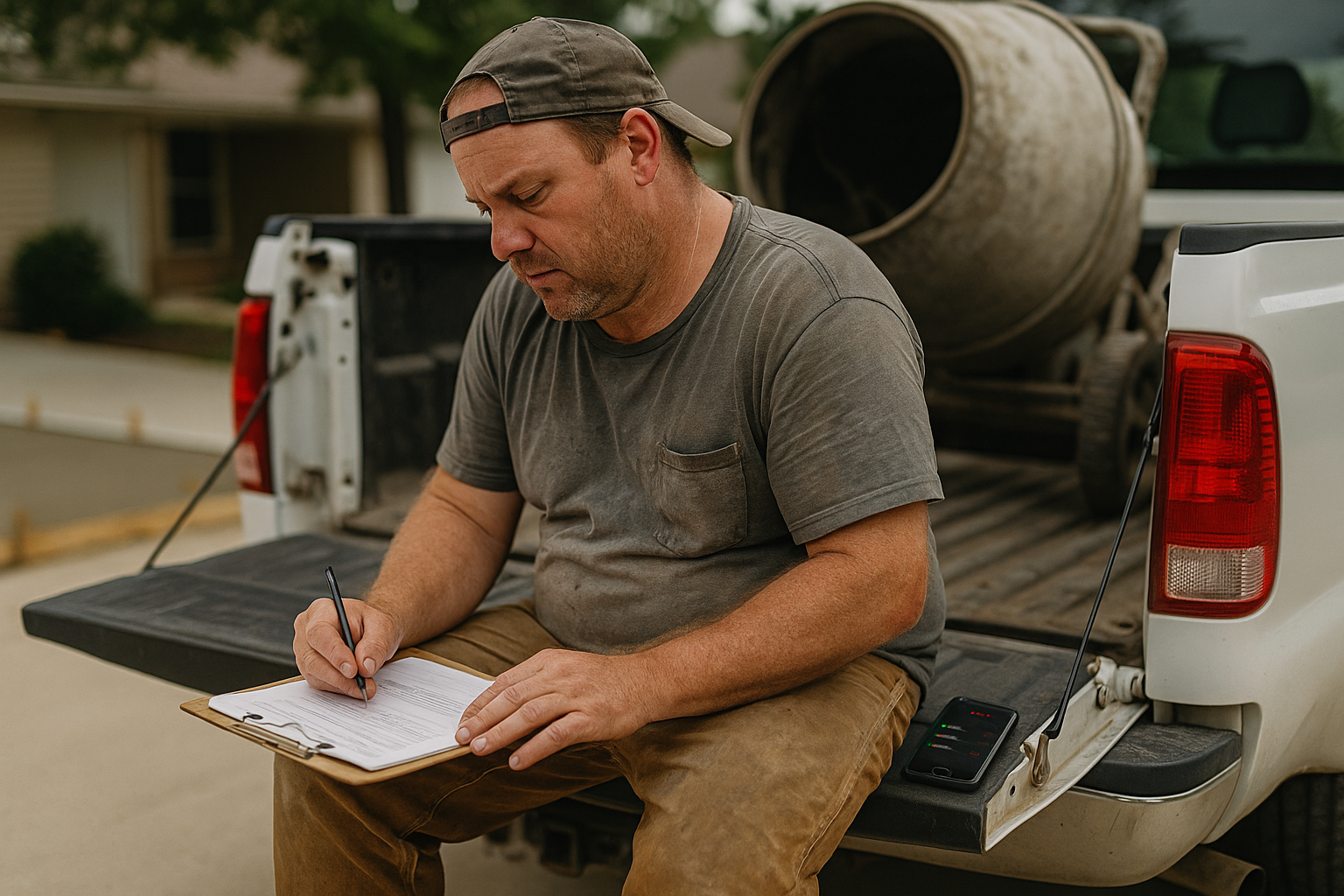
How Concrete Contractors Lose $40K Bids to Slow Response
Quick Answer
Concrete contractors lose high-value bids on driveways, patios, and commercial pads because they take 24 to 72 hours to respond to leads. By then, the homeowner or GC has already hired a competitor who answered first. AI-powered lead response captures these leads in under 60 seconds and books the estimate before the competition even sees the missed call.
A property manager needs 4,000 square feet of commercial parking pad poured before a new tenant moves in next month. She searches for concrete contractors, fills out three quote request forms before lunch, and calls two more. By 5pm, only one contractor has responded. He gets the $42,000 job. The other four call back over the next two days. Too late.
Concrete contractors operate in one of the highest-ticket segments of residential and commercial contracting, but they consistently lose bids to slower response times. According to Harvard Business Review, leads contacted within 5 minutes are 21x more likely to convert than those contacted after 30 minutes. For concrete work, where projects range from $8,000 residential driveways to $100,000+ commercial pads, every slow response is a five-figure loss walking to a faster competitor.
How Much Revenue Do Concrete Contractors Leave on the Table?
Concrete work is among the most profitable trades in contracting when jobs are won consistently. According to Angi, the average concrete driveway costs homeowners $3,000 to $10,000, stamped patios run $8,000 to $20,000, and commercial flatwork regularly exceeds $30,000 to $100,000 per project. A concrete contractor running two to three crews in a mid-size market might field 15 to 25 inbound leads per week during peak season.
CallRail data shows 28% of business calls go unanswered across service industries. Concrete contractors are often worse because the owner is on the job site operating equipment or managing pours that cannot be paused. Missing just 4 leads per week at an average residential job value of $12,000 adds up to $2.5 million in potential pipeline lost annually. Even at a conservative 20% close rate, that is $499,200 in real revenue walking to a competitor who picked up the phone.
| Project Type | Average Job Value | Missed Leads/Month | Annual Revenue at Risk |
|---|---|---|---|
| Residential driveways | $8,000 | 8 | $768,000 pipeline |
| Stamped patios | $15,000 | 5 | $900,000 pipeline |
| Commercial flatwork | $40,000 | 3 | $1.44M pipeline |
The math is straightforward. Concrete contractors who respond within minutes close more jobs than those who respond within days. InsideSales research confirms 78% of customers buy from the first business that responds. For the full breakdown of what a single missed call costs across trades, read the real cost of a missed call for contractors.
Why Concrete Contractors Are Especially Hard to Reach
Concrete work has a unique operational challenge that makes missed leads almost unavoidable without automation. Unlike trades where workers can pause between tasks, concrete pours are time-critical operations. Once the truck arrives and concrete starts flowing, the crew has a limited window before it begins to set. Nobody is answering the phone during a pour.
Most concrete contractors are also owner-operated businesses with small crews. According to IBISWorld, the concrete contractors industry includes over 80,000 businesses in the U.S., and the majority run 2 to 8 person crews. The owner handles sales, estimating, project management, and often works on-site alongside the crew. There is rarely a dedicated office person answering phones.
The seasonal nature of concrete work makes this worse. Spring and summer are peak season, which means the highest call volume arrives precisely when every crew is fully deployed. The contractor is busiest when the most leads are calling, creating a bottleneck that costs the most revenue during the months with the greatest earning potential.
This pattern is not unique to concrete. The same dynamic plays out across every hands-on trade, as explained in why the first 5 minutes determine which contractor wins the job.
What Happens When a Concrete Lead Gets an Instant Response
AI-powered lead response eliminates the gap between when a lead calls and when they hear back from a concrete contractor. The system works whether the lead comes in via phone call, web form, or text message.
AI Answers the Phone During Pours
An AI voice agent picks up every call within two rings, regardless of whether the contractor is knee-deep in a pour or driving between job sites. The AI greets the caller by the company name and asks about the project: residential or commercial, approximate square footage, type of finish (standard, stamped, exposed aggregate), and timeline. It collects the caller's name, property address, and contact information. According to Salesforce research, 66% of customers expect companies to understand their specific needs. A conversational AI that asks relevant concrete-specific questions meets that expectation from the first interaction.
Instant Text Follow-Up for Web Leads
When a lead fills out a quote request form on the contractor's website, the AI sends an SMS within 60 seconds: "Thanks for reaching out to [Company Name]. We got your request for a concrete estimate. Can you tell me a bit more about the project? Residential driveway, patio, commercial pad?" That text opens a real conversation where the AI qualifies the lead and schedules the on-site estimate. For more on how instant SMS changes close rates, read how contractors follow up with leads in under 60 seconds.
Estimate Visit Booked to the Calendar
The AI does not just take a message and promise a callback. It books the estimate appointment directly to the contractor's calendar based on availability and service area. The lead gets a confirmed date and time, plus an SMS confirmation. The contractor finishes the pour, checks the phone, and sees a new qualified estimate already on the schedule. No phone tag. No delay. No lost lead.
Stop Losing $40K Concrete Jobs to Slow Response
Zoey answers every call during your pours, qualifies the project, and books estimates directly to your calendar. You never miss a lead.
Book Your Free Strategy CallReal Scenario: The $35K Stamped Patio That Called Three Companies
A homeowner in a Phoenix suburb wanted a 1,200-square-foot stamped concrete patio with a built-in fire pit pad. The project budget was $30,000 to $38,000. She searched Google on a Saturday morning and called three concrete contractors before noon.
Contractor A was on a commercial pour and did not see the missed call until Monday. He called back Monday afternoon. The homeowner said she had already chosen someone. Contractor B answered the phone but was clearly distracted, rushing through the conversation while managing a crew. He said he would "get back to her with availability" and never did.
Contractor C had an AI voice agent that answered on the second ring. It asked about the project, learned it was a stamped patio with fire pit integration, collected the address and square footage, and booked an on-site estimate for the following Tuesday morning. The homeowner received an SMS confirmation within 30 seconds. Contractor C won the $35,000 job.
The homeowner later mentioned she was ready to call a fourth company but stopped once she had a confirmed appointment. One fast response converted a Saturday morning search into a five-figure contract.
Concrete Contractor Response Time: Traditional vs. AI-Powered
Concrete contractors who rely on returning calls between jobs or after work hours lose leads during their highest-earning periods. The comparison shows why AI-powered response outperforms traditional methods for concrete businesses.
| Factor | Traditional (Call Back Later) | AI-Powered Response |
|---|---|---|
| Response time | 4 hours to 2+ days | Under 60 seconds |
| During active pours | 100% of calls missed | 100% of calls answered |
| Weekend and evening leads | Voicemail until Monday | Answered and booked 24/7 |
| Lead qualification | Owner remembers to ask the right questions (maybe) | Standardized every time |
| Estimate booked during call | Almost never | Yes, directly to calendar |
| Monthly cost | $3,500-$5,000 for office hire | Starting at $997/month |
The "during active pours" line is critical for concrete specifically. Unlike other trades where work can be paused, a concrete pour is a continuous operation. Once the ready-mix truck arrives, the crew has 60 to 90 minutes before the concrete starts to set. Every call that comes in during that window is automatically missed under the traditional model. AI eliminates that blind spot entirely.
For a broader comparison of AI answering versus hiring office staff, read AI receptionist vs hiring staff: the real cost breakdown.
Frequently Asked Questions
How much does a concrete contractor lose from slow lead response?
The losses depend on the mix of residential and commercial work, but the numbers add up fast. A concrete contractor missing 4 qualified leads per week at an average residential job value of $12,000 creates over $2.5 million in annual pipeline exposure. At a conservative 20% conversion rate on estimates, that translates to nearly $500,000 in actual lost revenue. For contractors handling commercial flatwork at $40,000 to $100,000 per project, a single lost lead per month can represent $480,000 to $1.2 million in annual opportunity cost.
Why do concrete contractors miss so many phone calls?
Concrete work has a unique constraint that most other trades do not share: pours cannot be paused. Once the ready-mix truck arrives on site, the crew has roughly 60 to 90 minutes to pour, level, and finish before the concrete begins to set. During that window, every person on the crew is working continuously. The phone rings, nobody answers, and the call goes to voicemail. Add to this the fact that most concrete businesses are owner-operated with no office staff, and the result is a high percentage of missed calls during peak work hours.
How can concrete contractors answer leads during active pours?
AI voice agents answer every inbound call within seconds, even during active pours. The AI asks concrete-specific qualifying questions: project type (driveway, patio, sidewalk, commercial pad, foundation), approximate square footage, desired finish (broom, stamped, exposed aggregate, polished), and timeline. It then books an estimate appointment directly to the contractor's calendar. The contractor finishes the pour and sees the new qualified lead and booked appointment waiting. Starting at $997 per month, the AI operates around the clock, including weekends and evenings when homeowners are most actively searching.
The Concrete Contractor Who Responds First Pours the Job
Concrete is not a trade where customers wait around. When a homeowner decides they want a new driveway or a GC needs flatwork for a commercial project, they contact multiple contractors and go with whoever responds first and sounds professional. The contractor who waits until Monday to return Saturday's calls loses to the one who had an AI answering the phone at 9am on Saturday morning.
Every pour you are on is revenue you already won. Every call you miss during that pour is revenue you are handing to a competitor. AI-powered lead response makes both things true at the same time: you keep pouring, and your phone keeps booking. For more on why speed determines who wins the job across all contractor trades, read why contractor leads go cold in 5 minutes.
Win More Concrete Bids Without Leaving the Job Site
Book a free strategy call and see how AI answers your calls during pours, qualifies every lead, and fills your estimate calendar automatically.
Book Your Free Strategy Call