CPA Firms Lose Clients During Tax Season: Fix the Phone Problem
Quick Answer
CPA firm missed calls during tax season are a direct revenue leak. Each unanswered call from a business owner prospect represents $60,000 to $200,000 in lifetime client value. An AI receptionist answers every call 24/7, qualifies the prospect, and books the consultation before they dial the next firm.
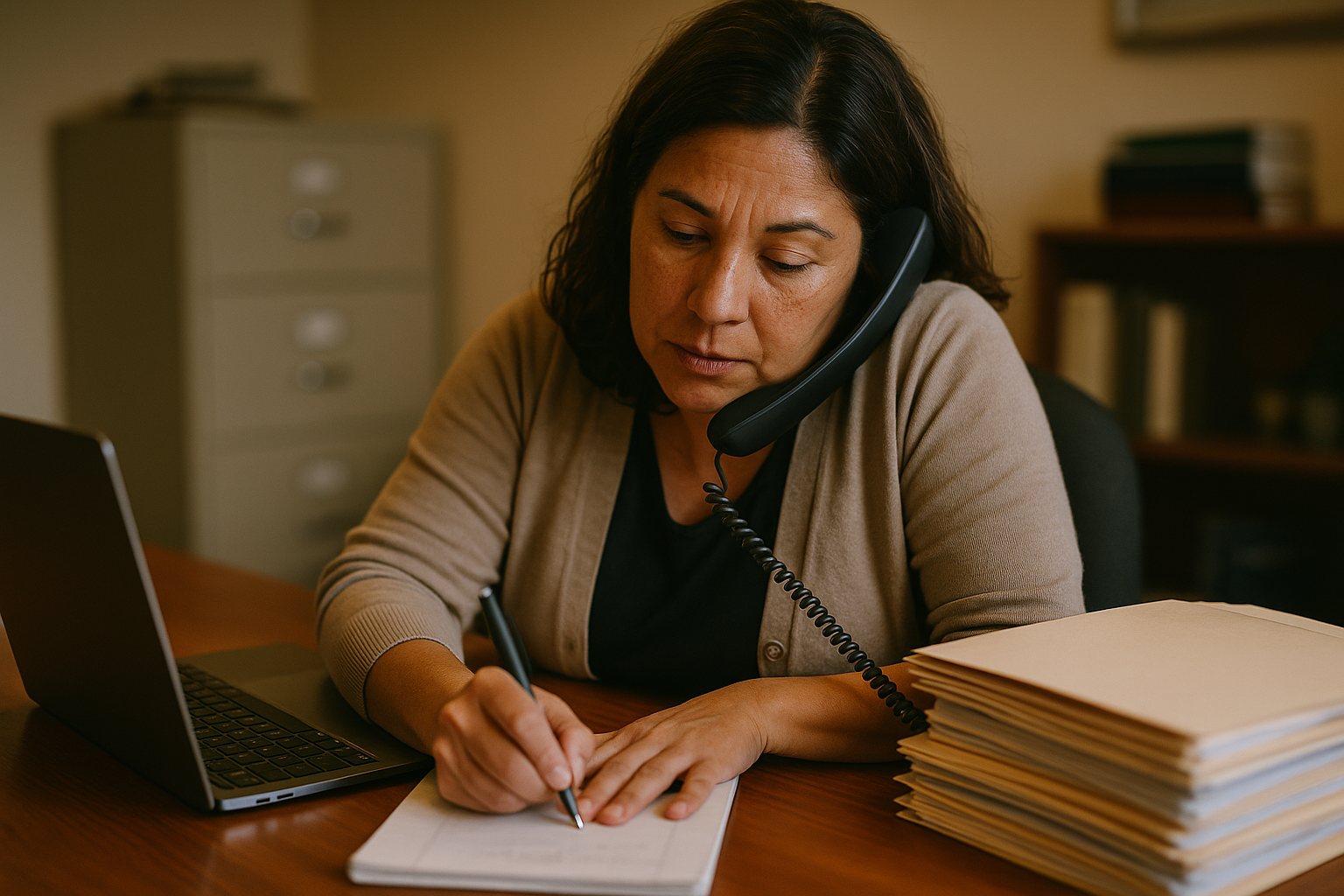
CPA firm missed calls during tax season are not a minor inconvenience. They are a compounding revenue problem that gets worse every January through April, the four months when your phone rings at three times its normal rate and your staff is already running flat out. A business owner calls about quarterly tax strategy, gets voicemail, and has an engagement signed with a competing firm before your callback goes through. That is not a missed call. That is a missed client worth five or six figures in lifetime fees.
This post covers exactly why accounting firms bleed inbound leads during peak season, what drives the problem structurally, and how firms are solving it with AI receptionist technology that handles call overflow without adding headcount.
The Tax Season Phone Problem CPA Firms Are Not Talking About
Every CPA firm knows tax season is busy. What most firms have not quantified is how much that busyness costs them in lost new business. Call volume for accounting and tax firms spikes 200 to 400 percent between January and April, according to industry data from AnswerConnect. That means the same front desk staff fielding 20 calls a day in October is suddenly handling 60 to 80 calls in February, often while managing deadline-driven client work simultaneously.
The result is predictable: calls go unanswered, callers get voicemail, and callers leave. According to CallRail's call analytics research, 28 percent of inbound business calls go unanswered on average across service industries. For CPA firms in peak season, that number climbs higher because staff capacity does not scale with volume.
The more damaging stat: 85 percent of callers who reach voicemail will not leave a message and will not call back (CallRail). They move on. In the accounting space, where most business owners are calling two or three firms before making a decision, the firm that answers first has a structural advantage. Research from InsideSales found that 78 percent of leads go to the first firm to respond. When your competitor picks up and you send the caller to voicemail, the decision is almost made.
Consider the math. A small business owner calling about bookkeeping, tax prep, and advisory services might represent $8,000 to $20,000 in annual fees. Over a five to ten year client relationship, that is $40,000 to $200,000 in lifetime value. A missed call that routes to a competitor does not cost you one month's invoice. It costs you the entire relationship.
| Client Type | Est. Annual Fees | 10-Year Lifetime Value |
|---|---|---|
| Solo contractor / freelancer | $3,000 – $6,000 | $30,000 – $60,000 |
| Small LLC (1–5 employees) | $8,000 – $18,000 | $80,000 – $180,000 |
| S-Corp or C-Corp (5–20 employees) | $15,000 – $40,000 | $150,000 – $400,000 |
| High-net-worth individual (complex returns) | $5,000 – $12,000 | $50,000 – $120,000 |
That table makes the phone problem land differently. It is no longer a staffing issue. It is a revenue protection issue.
Why Accounting Firms Keep Hitting the Same Wall Every Year
The phone overflow problem is structural, not incidental. CPA firms are built around a calendar that concentrates complexity into four months. Every returning client needs attention during the same window that new prospects are calling. Your most senior staff, the people best positioned to qualify a new business client on the phone, are billing maximum hours on existing work. Your front desk or admin team is fielding calls they may not be equipped to triage properly.
The traditional solutions firms try tend to address symptoms rather than the root cause:
- Temporary receptionist hires: Takes two to three weeks to recruit, another week to onboard, and the season is half over. Training a temp to properly qualify a complex business client is unrealistic in that window.
- Answering services: Generic answering services can take messages, but they cannot ask the right intake questions for accounting prospects: entity type, current bookkeeping situation, whether they have a tax professional already, what they are looking for. They deliver warm-body call handling, not qualified lead intake.
- Voicemail: As noted, 85 percent of callers abandon voicemail and do not call back. Voicemail is not a backup. It is an exit ramp.
- Extended office hours: Paying staff overtime during tax season has diminishing returns. Staff are already fatigued by February, and inbound prospects call evenings and weekends when they are not at work themselves.
The root cause is a mismatch between a predictable demand spike and a fixed-capacity response system. Every year the same four months arrive. Every year the same overflow happens. Firms that do not change the infrastructure of how they handle inbound calls will repeat this cycle indefinitely.
There is also a response time dimension that compounds the problem. Research from Harvard Business Review found that responding to an inbound lead within five minutes makes a prospect 21 times more likely to convert than waiting 30 minutes. For CPA firms, the average callback time during peak season stretches into hours, not minutes. By then, the prospect has already talked to someone else.
How AI Receptionist Technology Solves the CPA Firm Phone Problem
An AI receptionist built for CPA firm intake solves the overflow problem without adding headcount, without seasonal contracts, and without the training overhead of a temporary hire. Here is how the solution works in practice for accounting firms.
24/7 Call Answering with CPA-Specific Intake Questions
The AI answers every inbound call under a minute, regardless of time or call volume. Unlike a generic answering service, it is trained with the specific intake questions that matter for accounting prospects: business structure (sole prop, LLC, S-Corp, C-Corp), current tax situation, whether they are looking for bookkeeping, tax prep, advisory, or a combination, and what prompted them to call today. This information is captured and logged before the call ends, giving your staff a qualified lead summary rather than a name and a callback number.
Direct Calendar Booking
The AI does not send prospects a link and hope they follow through. It books directly to the CPA's consultation calendar in real time during the call. Prospects see available times, select one, and receive a confirmation. The appointment shows up in your calendar before the call is over. For firms offering a free initial consultation, this is the difference between a captured lead and an abandoned one.
SMS Follow-Up for Unresponsive Callers
For callers who hang up before completing the intake flow, the AI triggers an immediate SMS follow-up. With a 98 percent open rate for SMS versus 20 percent for email (HubSpot), a text within 60 seconds of a missed connection has a dramatically higher chance of re-engaging the prospect than any email or callback attempt. The message is personalized, references the call, and includes a direct booking link. This alone recovers a meaningful percentage of what would otherwise be permanently lost leads.
Call Forwarding for Complex Inquiries
Not every call needs AI handling end-to-end. The AI qualifies the call and, for prospects flagged as high-value or requiring immediate human attention, it transfers the call in real time to the right person on your team. Your senior staff are only pulled into calls that genuinely need them. Routine intake, scheduling, and FAQ calls stay handled automatically.
For a deeper comparison of this model against traditional staffing, see our post on AI receptionist vs. hiring staff. For context on what each missed call actually costs across service businesses, our analysis of the real cost of a missed call breaks down the lifetime value math in detail.
Stop Losing Business Clients to Voicemail This Tax Season
See exactly how AI receptionist technology handles CPA firm call overflow and books consultations 24/7. Takes 30 minutes to understand. Could save you one missed client this week.
Book Your Free Strategy CallWhat This Looks Like for a Real Accounting Firm
Consider a mid-size CPA firm in a major metro market, four CPAs and two admins, handling a mix of individual returns and small business clients. Between January 15 and April 15, inbound call volume triples. The two admins are managing a shared line, returning calls in batches when they can, and routing overflow to voicemail after hours.
In a single tax season, a firm this size might receive 400 to 600 inbound calls from new prospects. Using the 28 percent unanswered rate from CallRail, roughly 112 to 168 of those calls go unanswered. Of those, 85 percent do not leave a message or call back: approximately 95 to 143 permanently lost prospects. At a conservative $80,000 lifetime value per small business client, even capturing 10 percent of those lost contacts would represent $760,000 to $1.14 million in lifetime revenue recovered over a client lifecycle.
After implementing AI-assisted intake, the same firm routes all overflow calls to the AI system. Every call is answered under a minute, even at 9 PM on a Wednesday when a business owner just got off a call with their bookkeeper. The AI collects the intake information, books a 20-minute discovery call for the following week, and sends an immediate confirmation text. The CPAs arrive Monday morning with a scheduled pipeline of new prospect calls, fully qualified, rather than a list of voicemails to work through.
For a related look at how slow response times affect professional services client acquisition, see how financial advisors lose clients through the same intake gaps.
What to Look for in a CPA Firm Answering Solution
Not all AI receptionist or answering solutions are equal for accounting firm intake. Here is a comparison of what separates generic call coverage from a solution built for professional services.
| Feature | Generic Answering Service | AI Receptionist (Purpose-Built) |
|---|---|---|
| CPA-specific intake questions | No | Yes |
| Direct calendar booking | No (takes message only) | Yes |
| Automatic SMS follow-up | No | Yes |
| After-hours availability | Varies / extra cost | Always (24/7) |
| CRM logging of call data | No | Yes (every interaction) |
| Scales with call volume spike | Limited | Unlimited concurrent calls |
| Setup time | Days to weeks | 7 to 14 days |
The critical column is direct calendar booking. A service that takes a message and sends an email means your staff still needs to make the call, still needs to re-qualify the prospect, and still loses the window when the prospect was most engaged. Direct booking eliminates all three failure points.
Zoey, Rockitgo Digital's AI sales assistant, is built for exactly this use case. It handles inbound calls with custom intake flows, books directly to your calendar, triggers SMS follow-up, and logs every interaction in your CRM. Plans start at $997/mo with no contracts and a 7 to 14 day setup window, which means a firm that starts today can have the system active before the April deadline push begins.
The 64 percent of consumers who expect real-time responses (Salesforce) are not being unreasonable. They have been conditioned by every other service interaction to expect immediate acknowledgment. An AI receptionist that answers in under a minute meets that expectation without requiring your team to be available around the clock.
Frequently Asked Questions: CPA Firms and Missed Call Solutions
How many calls do CPA firms miss during tax season?
On average, 28 percent of inbound business calls go unanswered across service industries, according to CallRail. For CPA firms during peak season, that rate is typically higher because call volume triples while staff capacity stays fixed. Firms with two to three admin staff can see 100-plus unanswered calls in a single season, each representing a prospective client who moved on.
What is the lifetime value of a CPA client from a missed call?
A small business client paying for bookkeeping, tax prep, and advisory services typically generates $8,000 to $18,000 annually. Over a five to ten year engagement, that is $40,000 to $180,000 in lifetime fees. A single missed call from a qualified business owner prospect represents that full opportunity, not just one consultation or one tax return.
Can an AI receptionist handle CPA-specific intake questions?
Yes. AI receptionists built for professional services intake can be trained with accounting-specific qualification flows: business entity type, current bookkeeping situation, service needed, and urgency. The AI collects this information, logs it to the CRM, and books the discovery call before the conversation ends, so your team arrives at every consultation already informed.
What is the difference between an AI receptionist and a generic answering service?
A generic answering service takes a message and emails it to you. An AI receptionist qualifies the prospect with your specific intake questions, books directly to your calendar in real time, sends an SMS follow-up within 60 seconds if the caller disconnects, and logs all data to your CRM automatically. The core difference is the AI completes the booking rather than creating another callback task for your already-stretched staff.
Is it too late to set up an AI receptionist before the April deadline?
Setup for an AI receptionist like Zoey takes 7 to 14 days. A firm starting in early March can have the system live before the mid-March to mid-April peak, which is typically the highest-volume period for new prospect inquiries. No long-term contract is required, so there is no commitment risk to testing it this season.
The Calls Coming in This Week Will Not Wait Until May
Tax season does not slow down while you evaluate options. Business owners looking for a new CPA firm are calling now, comparing two or three options, and signing with whoever responds first. The firms capturing those clients are not necessarily better accountants. They are simply more reachable.
Fixing the phone problem before April does not require new staff, a new phone system, or a major operational overhaul. It requires a system that answers every call, qualifies every prospect, and books every viable lead directly to your calendar. That infrastructure can be live in under two weeks.
If your firm is heading into peak season with the same answering setup you had last year, the outcome will be the same: a predictable percentage of inbound new business goes to competitors who picked up.
Get Your CPA Firm Ready for Peak Season Calls
In 30 minutes we will walk through your current call handling setup and show you exactly what AI intake would look like for your firm, including the intake questions and booking flow. No obligation.
Book Your Free Strategy Call