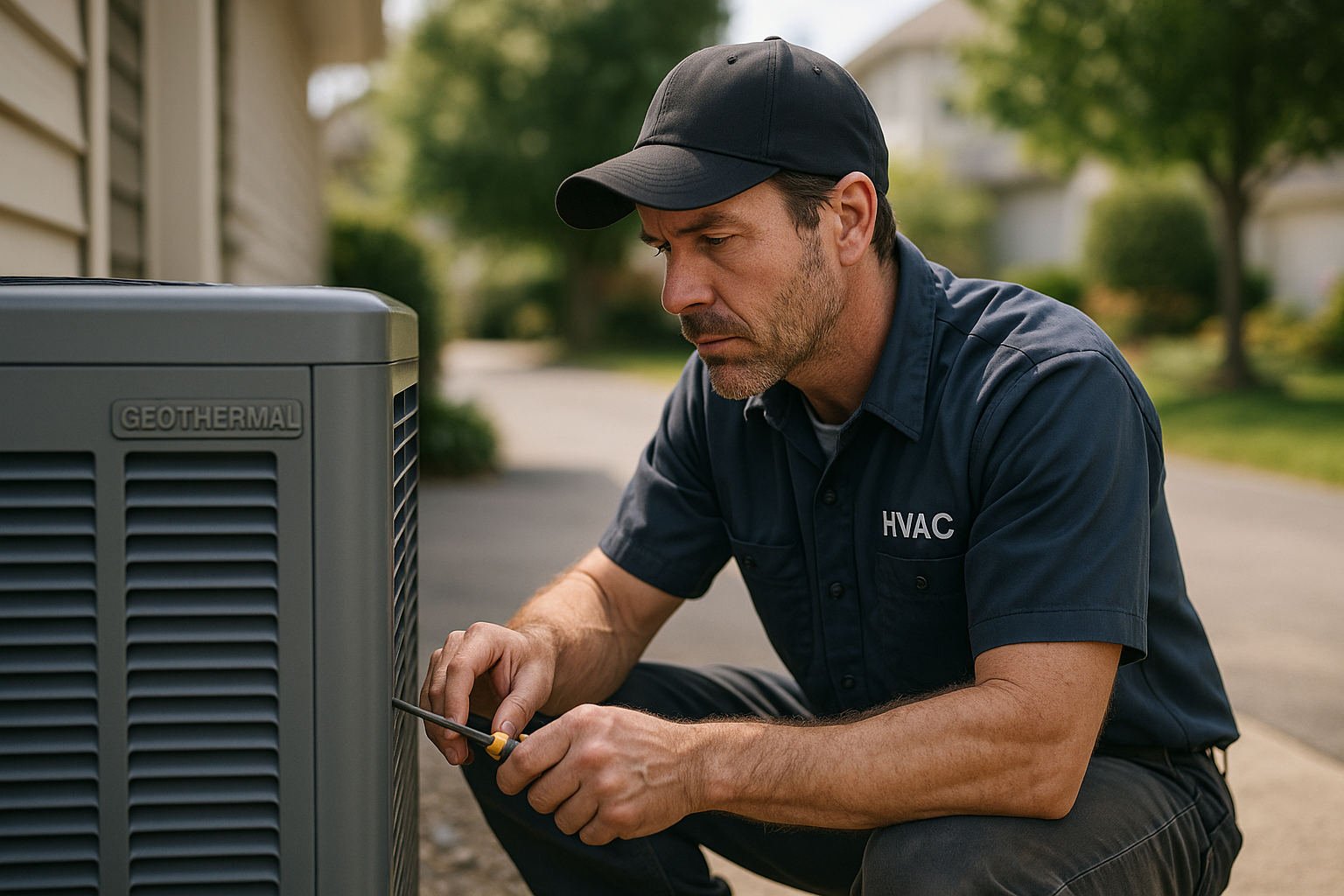
Geothermal HVAC Lead Capture: How Installers Convert Curious Homeowners
Quick Answer
Geothermal HVAC lead generation works by capturing research-phase inquiries early, then nurturing them over weeks or months with automated education sequences. Because jobs average $20K-$50K and homeowners research for months, the installer who responds fastest and follows up consistently wins the job.
Geothermal HVAC lead generation is unlike any other trade. Homeowners don't call you because the heat pump broke. They call because they've been reading about the Inflation Reduction Act's 30% federal tax credit, their utility bills are climbing, and they want to know if geothermal is worth it for their home. By the time they contact you, they've spent weeks doing research. What they haven't found yet is someone who will actually respond, explain the process, and hold their hand through a $30K decision.
That gap between "curious homeowner" and "signed contract" is exactly where geothermal HVAC installers lose most of their pipeline. This guide covers how to close it using automated lead capture, AI-powered follow-up, and a nurture system built for long-consideration buyers.
Why Geothermal HVAC Leads Are Different From Standard HVAC Leads
Standard HVAC replacements are emergency purchases. A homeowner's AC dies on a 95-degree day and they call whoever shows up first on Google. Geothermal is the opposite. It is a planned, high-consideration investment that homeowners research for 30 to 90 days before reaching out to a single installer.
That distinction changes everything about how you need to capture and manage leads. According to the U.S. Department of Energy, geothermal heat pumps can reduce home energy use by 25-50% compared to conventional systems. Homeowners researching that stat are not in a hurry. They are evaluating. They are comparing. And they are silently disqualifying every installer who doesn't follow up.
The average geothermal installation runs $20K to $50K depending on loop type, home size, and local soil conditions. At those job values, a single converted lead can represent more revenue than a week of standard HVAC service calls. Yet most geothermal installers handle inbound leads the same way they handle a thermostat replacement inquiry: wait for the homeowner to call again.
According to CallRail, 28% of business calls go unanswered. In a trade where every lead represents a potential $30K job, an unanswered call isn't a minor inconvenience. It's a $30K miss that lands with the competitor who picked up.
The further problem: 85% of callers won't leave a voicemail or call back (CallRail). They move on. For geothermal, that means they move on to a different installer or, worse, they shelve the project entirely and your pipeline shrinks.
The Root Cause: Geothermal Has a Customer Education Barrier No Other Trade Faces
Ask a homeowner what a new roof costs and they have a ballpark. Ask them what a geothermal heat pump system costs and they have no frame of reference. This is the root cause of long sales cycles in this trade: homeowners need to be educated before they can make a buying decision, and most installers have no automated system to deliver that education.
The typical geothermal inquiry looks like this: a homeowner fills out a contact form or calls after reading about the IRA tax credit. They have three or four questions. The installer answers them on the phone, sends a quote, and then waits. The homeowner goes quiet. Two weeks later, they sign with a competitor who sent a follow-up email with a cost breakdown and a link to a financing calculator.
The installer who lost that job wasn't less qualified. They simply had no system to stay in front of the lead during the decision window. According to HubSpot, 80% of sales require 5 or more follow-up touches. Most geothermal installers send zero follow-ups after the initial quote.
There is also a content education gap in this market. Search volume for "geothermal heat pump installer near me" and related terms is growing year over year as the IRA tax credit drives homeowner awareness. But unlike roofing or standard HVAC, almost no installers are doing SEO content or automated lead nurture. This creates a meaningful opportunity for the installer who builds a capture and nurture system first.
The Inflation Reduction Act extended the residential clean energy credit at 30% through 2032. A $35K geothermal system with a 30% tax credit means $10,500 back at tax time. That is a powerful selling point, but it only converts if you have a system that delivers it to the lead at the right moment in the decision process.
How to Build a Geothermal HVAC Lead Capture System That Converts
A working geothermal lead capture system has four layers: instant response, qualification, education automation, and booking. Each layer addresses a specific drop-off point in the buyer journey.
Layer 1: Instant Response Within One Minute
Research from Harvard Business Review shows leads contacted within five minutes are 21 times more likely to convert than those contacted after 30 minutes. For geothermal, where the homeowner is in research mode and has likely contacted two or three installers at once, being first to respond is the single highest-leverage action you can take.
An AI sales assistant like Zoey can respond to every inbound inquiry, call, or website form within under a minute, 24/7, including evenings and weekends when most homeowners do their research. The AI collects the homeowner's name, address, current heating system, home size, and whether they've heard about the tax credit. That qualification data shapes the follow-up sequence before a human ever touches the lead.
Layer 2: A Multi-Touch Education Sequence
After initial contact, most geothermal leads need 3 to 6 weeks of nurture before they are ready to commit. A proper nurture sequence might look like this:
- Day 0: Instant SMS confirmation with a two-sentence overview of the IRA 30% tax credit
- Day 2: Email with a cost-vs-savings breakdown for their home size range
- Day 5: SMS asking if they have questions about the loop installation process
- Day 10: Email with a case study from a similar home in their region
- Day 21: SMS reminder that your calendar is filling up for spring installations
According to HubSpot, SMS messages have a 98% open rate compared to 20% for email. Combining both channels ensures your education content actually reaches the homeowner during the decision window.
Layer 3: The Tax Credit Angle as the Conversion Trigger
The IRA 30% tax credit is the most powerful conversion lever in geothermal sales today. A homeowner on a $35K system saves $10,500 in taxes. That changes the effective cost from $35K to $24,500, which is in line with a standard whole-home HVAC replacement. Installers who lead with this math in their follow-up sequences close at significantly higher rates than those who discuss the credit only when asked.
Layer 4: Low-Friction Site Assessment Booking
The goal of the capture system is not to close the job over text. It is to book a site assessment, which is where geothermal jobs are actually won. Every SMS and email touchpoint should have a single call to action: schedule a no-cost site assessment. The booking should go directly into your calendar, not through a back-and-forth scheduling email chain. Just as following up in under 60 seconds converts more leads initially, making the booking step frictionless converts more leads at the assessment stage.
Real-World Example: A Texas Geothermal Installer Closes a $42K Job With Automated Follow-Up
A geothermal installer in the Dallas-Fort Worth area received an inquiry through their website at 7:42 PM on a Thursday. The homeowner had a 3,200 square foot home, a 20-year-old gas furnace, and had been reading about the tax credit for six weeks. They submitted the contact form and, within 45 seconds, received an SMS from the installer's AI assistant confirming the inquiry, providing a one-paragraph overview of the IRA credit, and asking two qualification questions.
Over the next three weeks, the homeowner received four additional automated follow-ups, including an email with a cost-savings analysis for a 3,200 square foot home and a SMS reminder about the installer's spring installation schedule. On day 19, the homeowner replied to a text and booked a site assessment. The job closed at $42,300. The installer's only manual involvement was the site visit and the installation itself.
Without the automated system, that inquiry would have sat unanswered until the next business day. The homeowner would have called two more installers that night. The job would have gone to whoever responded first.
This is why AI follow-up for solar installers has driven measurable conversion improvements in adjacent high-consideration trades. The same long-decision-cycle dynamics apply directly to geothermal.
You're Sitting on a $40K Pipeline. Don't Let It Go Cold.
See how Zoey captures geothermal inquiries, delivers the tax credit pitch, and books site assessments automatically, starting at $997/mo.
Book Your Free Strategy CallHow Geothermal HVAC Lead Generation Compares to Standard HVAC Marketing
The tactics that work for standard HVAC replacement leads don't fully translate to geothermal. Understanding the differences helps you allocate your marketing budget correctly.
| Factor | Standard HVAC | Geothermal HVAC |
|---|---|---|
| Avg job value | $11K-$20K | $20K-$50K+ |
| Purchase trigger | Emergency (system failure) | Planned (energy costs, tax credit) |
| Decision timeline | Same day to 48 hours | 30-90 days |
| Required follow-ups | 1-2 | 5-8 |
| Key conversion lever | Speed and availability | Education + tax credit math |
| Best lead source | Google local / emergency search | Organic content, IRA searches, referrals |
The key insight from this comparison: geothermal requires a longer automated nurture sequence but delivers more than double the job value. An installer who builds a proper capture and follow-up system for geothermal is building a pipeline that compounds over months, not a queue that empties each day.
Spring 2026 is also a timing advantage. Homeowners planning summer cooling alternatives are researching right now. The installer with a working lead capture system, optimized website content around the IRA credit, and automated follow-up running will capture the demand wave that peaks between March and June. Installers without that infrastructure will answer a fraction of those inquiries and follow up on fewer still.
If you want to see how the broader missed-call problem affects HVAC businesses specifically, the post on how HVAC companies lose leads to missed calls covers the numbers in detail. Geothermal amplifies every one of those problems because the job values are higher and the leads are harder to replace.
According to InsideSales research, 78% of leads go to the first responder. In a market where most geothermal installers have no automated response at all, the first-mover advantage is substantial.
Frequently Asked Questions About Geothermal HVAC Lead Generation
How long does it take to convert a geothermal HVAC lead?
Geothermal HVAC leads typically take 30 to 90 days from first inquiry to signed contract. The decision cycle is longer than standard HVAC because of the higher investment ($20K-$50K), the site assessment requirement, and the time homeowners need to research the IRA 30% tax credit and financing options. A multi-touch automated nurture sequence keeps your business visible during that entire window.
What is the best way to follow up with geothermal heat pump leads?
A multi-touch automated sequence combining SMS and email works best for geothermal lead follow-up. Lead with an instant response under one minute, deliver the IRA tax credit math on day 2, address loop installation questions on day 5, and send a regional case study on day 10. HubSpot data confirms SMS achieves a 98% open rate, making it the primary follow-up channel for geothermal prospects who are not yet ready to book.
Does the Inflation Reduction Act tax credit help close geothermal HVAC sales?
The IRA provides a 30% federal tax credit on residential geothermal heat pump installations through 2032. On a $35K system, that is $10,500 back at tax time. Presenting this math proactively in your follow-up sequence, rather than waiting for homeowners to ask, is one of the highest-leverage conversion tactics available to geothermal installers in 2026.
How much does a geothermal HVAC installation cost on average?
Residential geothermal installations typically cost $20K to $50K depending on loop type, home size, and soil conditions. After applying the IRA 30% tax credit, the effective homeowner cost drops significantly, making geothermal competitive with premium conventional HVAC systems. Framing the net cost clearly in your initial follow-up shortens the decision cycle and reduces the number of "I'm still thinking about it" responses.
The Geothermal Installer Who Builds the System Wins the Market
Geothermal HVAC is one of the fastest-growing residential trade categories in the country, driven by rising energy costs, federal incentives, and homeowners who are actively looking for alternatives to conventional heating and cooling. The problem is not demand. The problem is capture and nurture.
Every inquiry that goes unanswered after business hours is a $30K job that went to a competitor or got shelved. Every lead that received one email and then silence is a conversion that was left on the table. The installers who will own this market over the next three years are the ones building automated response and nurture systems right now, before the market gets competitive enough that every installer is doing it.
A working geothermal lead capture system responds within one minute, qualifies the lead, delivers the IRA tax credit math automatically, and keeps your business top of mind over a 30 to 90 day decision window. That is not a complicated build. It is the difference between a full spring install schedule and a pipeline full of leads who went cold.
Stop Losing $40K Geothermal Jobs to Competitors Who Respond Faster
Zoey responds to every inquiry within a minute, delivers the IRA credit pitch, and books site assessments directly to your calendar. Starting at $997/mo, no contracts.
Book Your Free Strategy Call