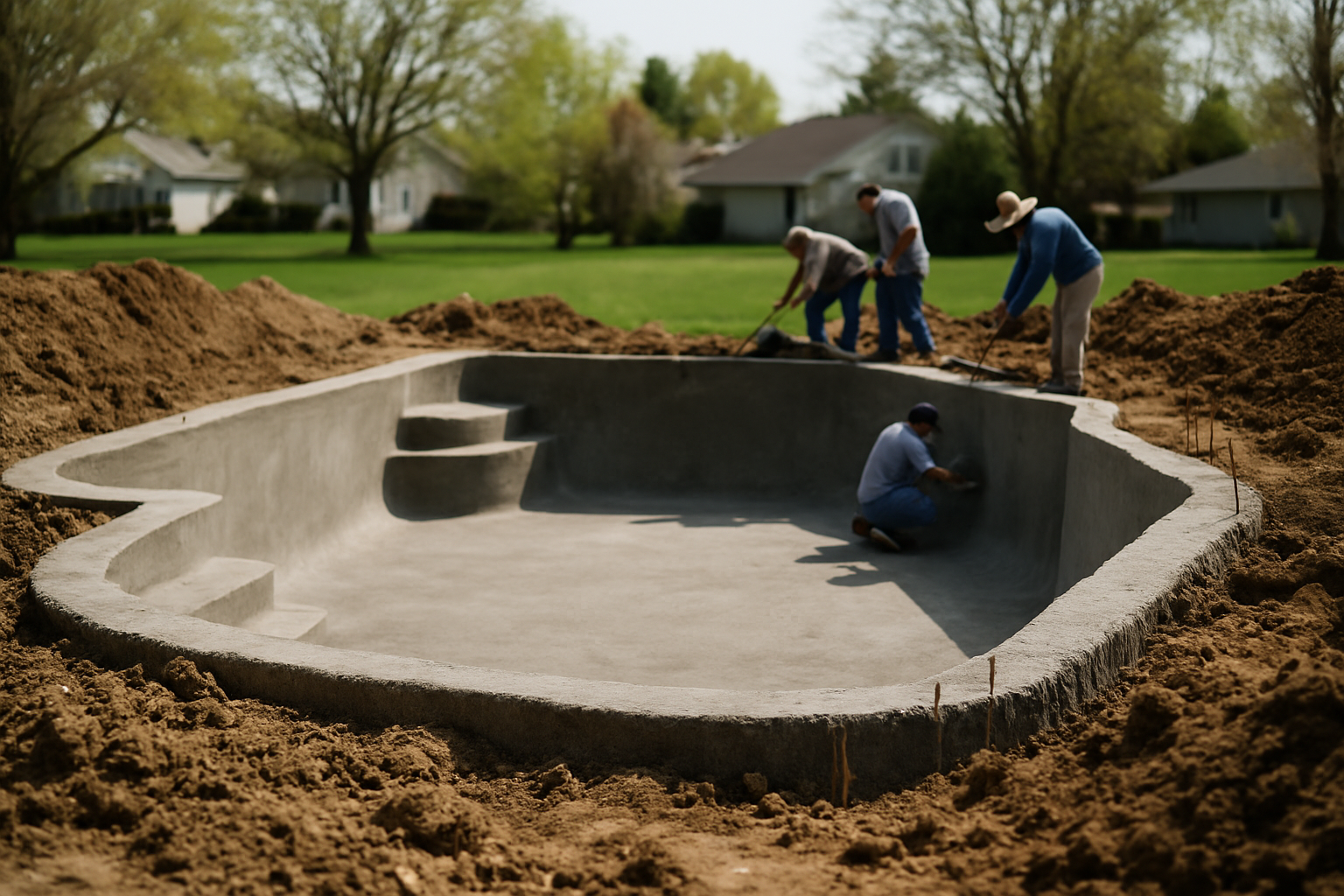
How a Pool Builder Books Spring Calendar 30 Days Early With AI
Quick Answer
A pool builder in the Inland Empire used AI lead capture and automated multi-touch follow-up to fill their April through June calendar 30 days early - in February - rather than scrambling in March and April like previous years. The key was capturing evening and weekend inquiries instantly and following up five or more times before going cold.
Every pool builder in Southern California knows the spring scramble. March arrives and the phones start ringing. Everyone wants their pool done by Memorial Day. The problem is that by the time homeowners are calling in March, the best pool builders are already booked through May. The ones who scramble in spring are the ones who did nothing in winter.
This is the story of how a pool builder in the Inland Empire changed that pattern. By implementing an AI lead capture system and automated follow-up workflow in January, they filled their spring pool builder calendar - April, May, and June consultations - by mid-February. That is a 30-day head start on every competitor who was still waiting for the phone to ring.
The approach is specific and repeatable. Here is exactly how it worked.
The Pool Builder Spring Booking Problem: Why Most Shops Start Too Late
Pool construction is one of the most seasonal businesses in contractor trades. In Southern California, serious homeowner inquiries for new pool construction begin as early as December and January - during what most pool builders treat as their slow season. These are homeowners who already know they want a pool by summer. They are doing research, getting ideas, and starting to reach out.
The problem is that most pool builders are not set up to capture and follow up with those winter inquiries effectively. The office runs lean in January. Website form submissions go to an email inbox that gets checked twice a week. Inbound calls during business hours might get answered, but evening calls - when homeowners do their research after work - hit voicemail. There is no follow-up automation in place.
According to HubSpot, 80% of sales require five or more follow-up touches before the lead converts. A homeowner who fills out a pool inquiry form in January and gets one email back, then silence, will have moved on to a competitor who stayed engaged by the time March arrives. That competitor did not just answer faster. They followed up longer.
The InsideSales research finding that 78% of leads go to the first responder is doubly relevant for pool builders because the competition for spring consultations starts months before spring. The pool builder who responds first to a December or January inquiry - and stays engaged - has a 30-day advantage over every competitor who waits for the spring surge.
The Before State: How This Pool Builder's Spring Used to Work
Before implementing automation, the Inland Empire pool builder in this case study followed a pattern common to the industry. January and February were quiet. The team ran at reduced capacity. Website inquiries came in sporadically and were followed up manually - usually within a day or two, sometimes longer. There was no structured follow-up sequence. If a homeowner did not respond to the first email or return call, they were generally considered a cold lead and dropped.
By March, when spring lead volume picked up, the company was starting from near zero in terms of consultation pipeline. They spent March booking April consultations, April booking May consultations. At no point in the spring did they feel ahead of demand. They were perpetually catching up to it.
The result was a spring that felt chaotic despite being profitable. Crews were busy, but the sales team was always reacting. No lead pipeline carried over from the pre-season inquiry period. Every year was the same scramble.
The System: How AI and Automation Changed the Spring Booking Timeline
The change came from implementing three connected components: AI-powered lead capture for after-hours and immediate response, a multi-touch automated follow-up sequence, and consultation booking automation tied directly to the sales calendar. Together, these components created a system where no inquiry went cold without at least five follow-up attempts.
Component 1: After-Hours Lead Capture With Zoey
The first change was deploying Zoey, Rockitgo Digital's AI sales assistant, to handle inbound leads across all channels. When a homeowner fills out the contact form at 9pm in January, they receive a response within under a minute - not a canned auto-reply, but a real conversation starter: "Thanks for reaching out about your pool project. Can you tell me a bit about what you have in mind - backyard size, any features, and when you are hoping to get started?"
That response arrives before the homeowner has closed their browser tab. They are still thinking about their pool. The conversation starts immediately.
The same system handles inbound phone calls. When the call goes unanswered during a busy day on the job site, Zoey fires an SMS within 60 seconds. The homeowner does not reach voicemail and move on. They get a text that starts the conversation. According to HubSpot, SMS messages carry a 98% open rate versus 20% for email. A text response gets seen. A voicemail often does not.
Component 2: The Five-Touch Follow-Up Sequence
The second component was a structured multi-touch follow-up sequence that ran automatically from the moment a lead came in. The sequence for a pool inquiry looked like this:
| Touch | Channel | Timing | Message Focus |
|---|---|---|---|
| Touch 1 | SMS | Under 60 seconds | Initial reply, open conversation, ask qualifying question |
| Touch 2 | Same day | More detail on process, link to portfolio, invite to book consult | |
| Touch 3 | SMS | Day 2 | "Spring slots fill fast - we have availability in April if you want to lock in" |
| Touch 4 | Day 5 | Case study or completed project photo, timeline expectations | |
| Touch 5 | SMS | Day 10 | Final check-in, direct booking link, "no pressure - here if you're ready" |
Every touch was automated. The sales team did not manually send any of these. They only stepped in when a lead responded and moved to the consultation booking stage. The system handled the pre-consultation outreach entirely.
This is the practical application of the HubSpot finding that 80% of sales require five or more contacts. Most pool builders make one or two attempts and give up. This system made five attempts automatically, on a schedule, across two channels. The leads who were going cold after the first email were now converting on touch three, four, or five.
Component 3: Direct Calendar Booking
The third component was a direct booking link embedded in the follow-up sequence. Rather than asking homeowners to call during business hours to schedule a consultation, the system gave them a link to book directly into the sales calendar at any time. A homeowner doing their research on a Sunday evening could book a Thursday morning consultation without a single phone call.
When a consultation was booked, the system automatically sent a confirmation, a reminder 48 hours before, and a day-of reminder. The show rate for consultations improved significantly. The sales team arrived at each consultation with the lead already qualified - the AI had gathered information about the project scope, the backyard dimensions, the homeowner's timeline, and their budget range before the meeting.
The Results: Spring Calendar Filled 30 Days Early
By implementing the system in January, the pool builder saw a measurable change in their spring booking timeline. Inquiry volume in January and February was similar to prior years - the demand had always been there. What changed was capture and conversion rates.
In prior years, an evening inquiry that hit voicemail in January had roughly a 15 to 20% chance of converting to a consultation. The homeowner would sometimes call back, sometimes not. With the automated SMS response and five-touch sequence, that conversion rate improved substantially - more inquiries became active conversations, and more active conversations became booked consultations.
The specific outcome: by mid-February, the pool builder had filled their April and May consultation slots and was booking into June. In prior years, those same slots were still being filled in March and April. The 30-day shift in the booking timeline was not the result of more marketing spend or more calls. It was the result of capturing and following up with the same inquiry volume more effectively.
For context on how multi-channel follow-up drives this kind of result across contractor trades, see the guide to multi-channel follow-up for contractors.
Why the Timing Advantage Compounds for Pool Builders
The 30-day calendar advantage is worth more than it sounds. When your April and May consultation slots are booked in February, several things happen that improve the entire season:
- Crew scheduling becomes predictable. You know your build schedule weeks earlier, which means better subcontractor coordination and fewer last-minute scrambles on excavation or concrete crews.
- Material procurement improves. Early booking means earlier permit applications and earlier material orders, reducing the lead time issues that delay spring builds.
- You select better projects. With a fuller pipeline, you can be selective. Difficult sites, low-margin jobs, or homeowners who are clearly price-shopping get declined in favor of the stronger opportunities already in your pipeline.
- Word of mouth accelerates. Homeowners in the same neighborhood talk. If your pools from April builds are done and swimming by June, the neighbor who called in May gets a referral from a pool already in the ground.
None of these benefits happen when you are scrambling to fill the calendar in real time. The pre-season calendar advantage creates a compounding effect across the entire operating season.
Fill Your Spring Pool Calendar Before the Scramble Starts
Book a free strategy call. We will walk through how the lead capture and follow-up workflow would work for your pool building business specifically, including your current inquiry volume and where consultations are slipping.
Book Your Free Strategy CallHow to Implement This System for Your Pool Business
The workflow this pool builder used is not industry-specific - it is a lead capture and follow-up architecture that applies to any pool builder with consistent inbound inquiry volume. Here is the setup framework:
Step 1: Audit Your Current Inquiry Response Time
Before building automation, understand your baseline. How long does it currently take your business to respond to a web form submission? What happens to inbound calls that come in after 5pm? What is your current follow-up volume - how many times do you contact a lead before giving up? Most pool builders respond once or twice and let the lead go cold. That is the gap the automation fills.
Step 2: Deploy After-Hours Lead Capture
Set up an AI-powered response system that fires an SMS to every missed call and web form submission within 60 seconds. The message should be personalized to pool inquiries: it acknowledges the inquiry, starts with a qualifying question (yard size, timeline, features in mind), and gives the homeowner a reason to respond now rather than later. Evening inquiries - which represent a significant portion of pool builder leads from homeowners who do their research after work - get captured in real time instead of sitting in an email inbox until morning.
Step 3: Build the Five-Touch Sequence
Configure an automated follow-up sequence with a minimum of five touches across SMS and email. Space them out over ten days. The early touches are informational and inviting. The later touches add urgency by referencing spring availability and calendar constraints. Every touch includes a direct booking link for the consultation. HubSpot's research on 80% of sales requiring five or more contacts is not theoretical - the practical implication is that most of your competitors are giving up before they reach the touches where most conversions happen.
Step 4: Automate the Consultation Booking
Remove friction from the consultation scheduling step. Give homeowners a direct calendar link they can use at any time to book a consultation without calling your office. Set up automatic confirmation and reminder messages so the show rate stays high. Before the consultation, have the AI gather the basic project details so your sales team arrives informed.
Step 5: Start in January
This is the most important step. The system needs to be running by January to capture the December and January inquiries that become spring consultations. If you wait until March to set up automation, you have already missed the pre-season inquiry window. The pool builders who fill spring calendars in February are the ones who started the system in the prior November or December.
For more detail on how pool builders manage lead flow during the spring surge, see the guide on pool builder spring lead management.
Comparing Lead Capture Approaches for Pool Builders
| Approach | After-Hours Coverage | Follow-Up Consistency | Calendar Booking | Pre-Season Advantage |
|---|---|---|---|---|
| Manual only (call back next day) | None | 1-2 attempts max | Phone only, business hours | None |
| Email auto-responder only | Partial (email only) | 1-2 automated emails | Link in email, low response | Minimal |
| AI capture + 5-touch SMS/email sequence | Full 24/7 | 5 touches, automated | Direct booking, any device, any time | 30+ days |
Frequently Asked Questions About Pool Builder Spring Booking
How do pool builders fill their spring calendar early?
The mechanism is simple: capture winter inquiries faster and follow up longer. Most pool builders let December and January web form submissions sit until morning and then follow up once or twice. An AI-powered system responds in under a minute around the clock and triggers a five-touch automated sequence across SMS and email. The same inquiry volume converts to consultations at a much higher rate, and those consultations happen 30 days earlier in the season.
What is the right number of follow-up touches for a pool inquiry?
Five or more, according to HubSpot's research that 80% of sales require at least five contacts. A single email or call-back attempt reaches the segment of leads who were already ready to book. The rest - the majority - need multiple touches across different channels before they commit to a consultation. The five-touch sequence over ten days covers that range without overwhelming the homeowner or requiring manual effort from the sales team.
Why do pool builders lose leads in winter despite strong demand?
The main reasons are response speed and follow-up volume. Evening web form submissions sit until morning. After-hours calls hit voicemail. Follow-up is inconsistent - one call, one email, then nothing. Homeowners who inquire in January are often comparing three to five builders. The first to respond and the most persistent in follow-up win the consultation. Most pool builders cede both of those advantages without realizing it.
How does direct calendar booking improve pool builder conversion rates?
Direct booking links remove the friction of scheduling by phone. A homeowner who decides to move forward at 10pm on a Sunday can book a Thursday consultation without waiting until Monday to call. Show rates for consultations also improve when automated reminders go out 48 hours and 24 hours before the appointment. Qualified leads who booked themselves rarely forget - unlike leads who were told "we'll call you to schedule."
Getting Ahead of the Spring Rush for Good
The pool builder spring calendar problem is structural: demand builds from December onward, but most shops do not have systems to capture it. The result is a March and April scramble that every builder in the market feels simultaneously - and a winner-take-most dynamic where the builders with the best response systems book the best projects first.
The Inland Empire pool builder in this case study did not spend more on advertising to get ahead. They spent the same. They just captured more of the inquiries that were already coming in by responding faster and following up longer. That is the entire shift: from a reactive spring to a proactive one, built on a system that runs automatically while the team focuses on the jobs already underway.
For pool builders ready to apply this approach, the window is now. The December and January inquiries for this spring are already happening. Every week without a lead capture and follow-up system is a week of inquiry volume slipping to competitors who have one.
For more on how pool builders can book more consultations throughout the year, see the guide on how pool builders book more consultations.
Stop Scrambling Every Spring - Book a Call Today
We will walk through how to set up lead capture and five-touch follow-up for your pool building business. One call to build the system that fills your spring calendar before your competitors even start making calls.
Book Your Free Strategy Call