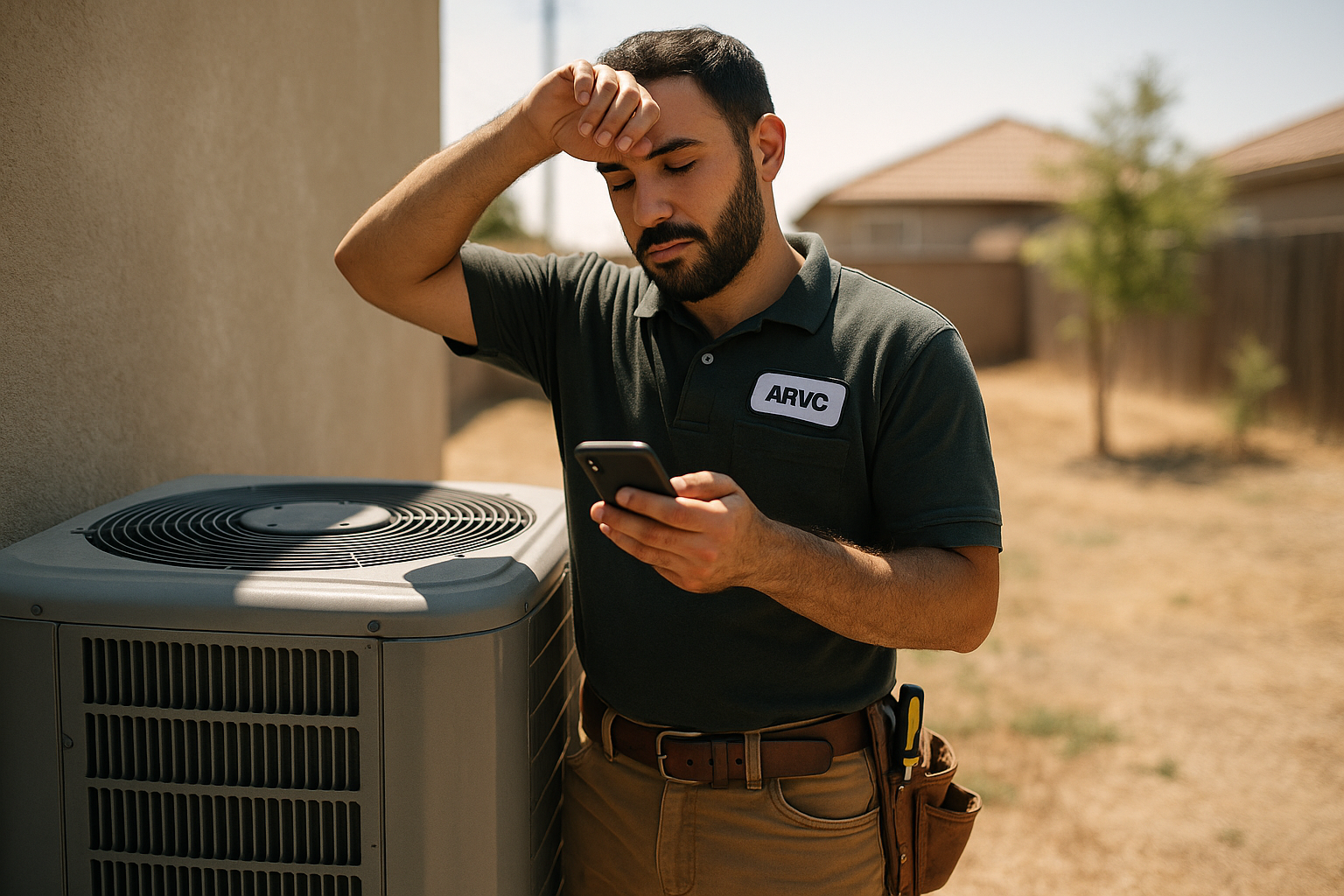
How Ontario HVAC Companies Stop Losing Emergency Calls
Quick Answer
Ontario CA HVAC companies stop losing emergency calls by using an AI assistant that responds to every missed call within 60 seconds via text, qualifies the homeowner's AC issue, and books the service appointment directly to the technician's calendar. The system runs 24/7, including during heat waves when call volume spikes 3-5x and office lines are overwhelmed.
Ontario, California sits in the heart of the Inland Empire, where summer temperatures regularly push past 110 degrees Fahrenheit. When an air conditioner fails in that heat, the homeowner does not wait. They call the first HVAC company they find, and if nobody answers, they call the next one. Ontario CA HVAC missed calls are not minor inconveniences. They are lost revenue, lost customers, and lost referrals that compound across every heat wave from June through September.
According to CallRail data, 28% of business calls go unanswered across service industries. For an HVAC company running emergency calls during a triple-digit heat event, that number climbs higher. Every technician is on a roof or in a crawlspace. The office phone is ringing nonstop. The calls that slip through are worth $500 to $15,000 each, and most of them never call back.
How Many Emergency Calls Do Ontario HVAC Companies Actually Lose?
Ontario is a city of over 180,000 people with a growing residential footprint. New housing developments stretch east toward Rancho Cucamonga and south toward Chino. Every new home needs HVAC service eventually, and every existing home with a system older than 10 years is a replacement candidate. The market is large, and the demand during summer is relentless.
During a typical Inland Empire heat wave, an established Ontario HVAC company can receive 3-5 times its normal daily call volume. A company that normally handles 20 calls per day suddenly fields 60-100. The office staff, if the company even has dedicated office staff, cannot keep up. According to CallRail, 85% of callers who reach voicemail will not leave a message or call back. They dial the next company instead.
The financial impact is significant. Emergency HVAC repair calls in Ontario average $500-$2,000, but those emergency calls frequently lead to full system replacements averaging $8,000-$15,000. A Rockitgo Digital estimate puts the average annual revenue lost to missed calls for contractors at $126,000. For HVAC companies in extreme-heat markets like Ontario, that figure can run much higher during peak season.
| Ontario HVAC Call Scenario | Typical Outcome Without AI | Revenue at Risk |
|---|---|---|
| Emergency repair call (AC down, 110+ degrees) | Voicemail, homeowner calls competitor | $500-$2,000 repair |
| Repair that leads to system replacement | Lost customer, lost $12K+ upsell | $8,000-$15,000 replacement |
| New construction install inquiry | No callback for hours, builder moves on | $12,000-$25,000 full system |
| After-hours weekend call | Goes to voicemail until Monday | $1,000-$15,000 (varies) |
Why Ontario HVAC Techs Cannot Answer the Phone During Peak Season
The root cause of Ontario CA HVAC missed calls is not negligence. It is a structural problem built into how HVAC companies operate. When summer hits and the temperature reaches 100-115 degrees across the Inland Empire, every technician is dispatched on emergency calls. They are physically on ladders, inside attics, or working beside outdoor condensers. They cannot stop what they are doing to answer the office phone.
Most Ontario HVAC companies with 3-8 technicians have one or two people in the office handling dispatch, scheduling, and phone calls. During normal weeks, that works. During a heat wave, those one or two people are fielding 60-100 calls per day while also coordinating emergency dispatches, ordering parts, and managing an overflowing calendar. Calls stack up, hold times increase, and many callers simply hang up. According to Salesforce research, 64% of consumers expect real-time responses from businesses they contact. An HVAC company with a 45-minute callback time during a heat emergency does not meet that expectation.
The owner is usually the most overloaded person in the building. Many Ontario HVAC owners still run calls themselves during peak weeks. They are answering phones between service stops, losing track of which leads they returned and which ones slipped through. The result is a company that is busier than ever but still losing revenue because the phone coverage cannot scale with the demand. For a full breakdown of how this plays out across the HVAC industry, read how HVAC companies lose leads to missed calls.
How AI Call Handling Solves Ontario HVAC Missed Calls
The solution is an AI-powered system that handles every inbound call and text message the moment it arrives, regardless of whether anyone on the HVAC team is available. Here is how it works for an Ontario HVAC company.
Missed Call Text-Back in Under 60 Seconds
When a call goes unanswered, the AI sends an automatic text to the caller within 60 seconds: "Hey, this is [Company Name]. Looks like we missed your call. Is your AC giving you trouble? Tell me what's going on and I'll get you on our schedule." The homeowner, sitting in a 110-degree house, gets an immediate response before they have finished dialing the next company on their list.
AI Qualification Conversation
The AI continues the text conversation. It asks what type of system the homeowner has, what the issue is, when the problem started, and the service address. It collects the information your technician needs before showing up, so the dispatch is efficient and the tech arrives prepared. According to Harvard Business Review, leads contacted within 5 minutes are 21 times more likely to convert than those contacted after 30 minutes. AI text-back hits that window every single time.
Direct Calendar Booking
After qualifying the lead, the AI books the service appointment directly to your technician's calendar. The homeowner gets a confirmation with the date and time. Your dispatch team sees the new booking. No phone tag, no callbacks, no sticky notes. The job is on the schedule before the homeowner had time to call a second company. For more on the AI system that handles this, read about the AI receptionist built for contractors.
What This Looks Like for a Real Ontario HVAC Company
An Ontario HVAC company running 5 trucks receives roughly 50 calls per day during a July heat wave. Under their old system, their office manager and one part-time dispatcher handle all inbound calls. On a normal week, about 30% of calls go unanswered during peak hours. During heat wave weeks, that number climbs to nearly 40%.
That means 20 missed calls per day during a heat wave. At an average initial job value of $1,200 (the weighted average across emergency repairs, diagnostics, and system evaluations), those missed calls represent $24,000 in potential daily revenue walking to competitors. Even capturing half of those leads changes the company's entire season.
With AI call handling, here is what changes. Every one of those 20 missed calls gets a text within 60 seconds. Research from HubSpot shows SMS has a 98% open rate compared to just 20% for email. Most homeowners reply within minutes. The AI qualifies them and books service appointments. The company goes from losing 20 calls per day to capturing 12-15 of them, adding $14,400-$18,000 in daily pipeline value during the weeks that matter most.
The long-term impact is even larger. Those emergency repair customers become replacement customers when their 15-year-old system fails again next summer. A single $1,200 repair lead that would have gone to voicemail can turn into a $12,000 system replacement within 12 months. For the full revenue math on missed calls, read the real cost of a missed call for contractors.
Stop Losing Emergency Calls This Summer
See how Ontario HVAC companies use Zoey to capture every missed call, qualify leads by text, and book service appointments 24/7.
Book Your Free Strategy CallWhy After-Hours Coverage Matters More in Ontario Than Coastal Cities
Coastal Southern California cities like Santa Monica or Long Beach rarely see temperatures above 85 degrees. HVAC emergencies are less urgent, and homeowners are more likely to wait until the next business day to call. Ontario is different. When the temperature is still 95 degrees at 8 PM and a family's AC unit stops working, they are calling for help immediately. According to InsideSales research, 78% of leads go to the first company that responds. The Ontario HVAC company whose AI answers at 9 PM on a Saturday wins the job over the competitor whose voicemail says "We'll return your call Monday morning."
Ontario's rapid residential growth also creates consistent new-installation demand year-round. Builders and general contractors working on housing developments in the eastern Inland Empire corridor need HVAC subcontractors who respond quickly to bid requests. A builder who sends a bid request on Friday afternoon and hears back within an hour is far more likely to award the contract than one who waits until Monday for a response. AI coverage ensures those after-hours inquiries from builders and property managers get immediate attention.
The difference between coastal and inland HVAC markets comes down to urgency. In Ontario, a missed call at 7 PM is not a lead that can wait until tomorrow. It is a family in a dangerously hot house making a decision right now. The company that responds first gets the job. For a look at how another Inland Empire-adjacent HVAC market handles this, see how Long Beach HVAC companies book more jobs with faster response.
| Response Method | Average Response Time | Lead Capture Rate |
|---|---|---|
| Voicemail only | Next business day (8-16 hours) | 15% or less |
| Office staff callback | 30 min - 3 hours | 30-40% |
| Answering service | 5-15 minutes | 40-50% |
| AI text-back + qualification | Under 60 seconds | 65-75% |
Frequently Asked Questions
How many calls do Ontario HVAC companies miss during heat waves?
During Inland Empire heat waves with temperatures above 100 degrees, Ontario HVAC companies can receive 3-5 times their normal call volume. With limited office staff, 30-40% of those calls go unanswered during peak hours. CallRail data shows 85% of those callers will not leave a voicemail or call back, meaning they call a competitor instead.
What is the best way for Ontario HVAC companies to handle overflow calls?
AI-powered missed call text-back is the most effective overflow solution for Ontario HVAC companies. Every unanswered call triggers an automatic text within 60 seconds. The AI qualifies the homeowner's issue and books a service appointment directly to the calendar. Unlike answering services, the AI handles the full qualification and booking process without requiring a callback from your team.
How much revenue do Ontario HVAC companies lose from missed calls?
Rockitgo Digital estimates contractors lose an average of $126,000 per year to missed calls. For Ontario HVAC companies in extreme-heat markets, the figure runs higher during June through September when emergency call volume spikes. A single missed emergency repair call worth $1,200 can also represent a lost $12,000 system replacement if that customer never returns.
Does AI call handling work for after-hours HVAC emergencies in Ontario?
AI call handling runs 24/7 including evenings, weekends, and holidays. In Ontario where temperatures can stay above 95 degrees after sunset during heat events, after-hours HVAC calls are urgent and time-sensitive. The AI responds within 60 seconds regardless of the time of day, qualifies the issue, and books the earliest available service slot so the homeowner is not left waiting until Monday morning.
Ontario HVAC Companies That Answer First Win the Inland Empire
The Inland Empire HVAC market is growing with Ontario's expanding residential footprint. The demand is there. The homeowners are calling. The only question is whether your company answers before the competitor two miles down the road does. Ontario CA HVAC missed calls are not an unavoidable cost of being busy. They are a solvable problem with a system that responds in under a minute, qualifies the lead, and books the job while your technicians stay focused on the work in front of them.
Zoey, Rockitgo Digital's AI sales assistant, handles this entire workflow starting at $997/mo. Setup takes 7-14 days. No contracts. The system is configured for your Ontario service area, your technician availability, and your specific HVAC services. Every call gets answered. Every lead gets qualified. Every appointment gets booked. For HVAC companies in the Inland Empire, that is the difference between surviving summer and owning it. To see how another SoCal HVAC market uses SMS to win jobs faster, read about Thousand Oaks HVAC companies using 60-second SMS follow-up.
Ready to Capture Every Emergency Call This Summer?
Book a free strategy call and see how Zoey responds to your missed calls in under a minute, qualifies HVAC leads, and books service appointments to your calendar 24/7.
Book Your Free Strategy Call