Outdoor Kitchen Contractors: Stop Losing $35K Projects to Slow Follow-Up
Quick Answer
Outdoor kitchen and hardscaping contractors lose spring projects because homeowners request 3-5 estimates and sign with whoever follows up consistently. The fix is automated follow-up that contacts every lead within 60 seconds and keeps the conversation going across SMS and email until the contract is signed.
Spring is the single most important season for outdoor kitchen contractors and hardscape specialists. Homeowners start researching outdoor living projects in February and March, request estimates in April, and sign contracts in May before the summer build season fills up. If your follow-up during that window is slow or inconsistent, you lose $25K-$50K projects to competitors who are no better at the craft but faster at the phone. This post breaks down exactly why outdoor kitchen contractors and hardscaping contractors lose bids during the spring rush and what you can do about it.
Why Spring Is Make-or-Break for Hardscaping Contractors
The outdoor kitchen and hardscape market is intensely seasonal. According to IBISWorld, landscaping and hardscape contractors see 60-70% of their annual revenue concentrated in spring and early summer. That means four months determine your whole year.
Homeowners planning a backyard renovation don't just call one contractor. They request multiple estimates from multiple companies, compare designs and materials, and take weeks to make a decision. During those weeks, your follow-up is the only thing keeping you top of mind. Most hardscaping contractors do excellent work but terrible follow-up. They give a great in-person estimate, send a PDF proposal, and then wait. The homeowner gets three more proposals from competitors. Two of those competitors follow up within 48 hours. One sends a text with a project photo. You hear nothing from the homeowner and assume they went elsewhere. You're right.
According to HubSpot, 80% of sales require five or more follow-up touches to close. Most contractors make one or two. The gap between what's required and what contractors actually do is where spring revenue disappears.
The Real Problem: What Happens After the Estimate
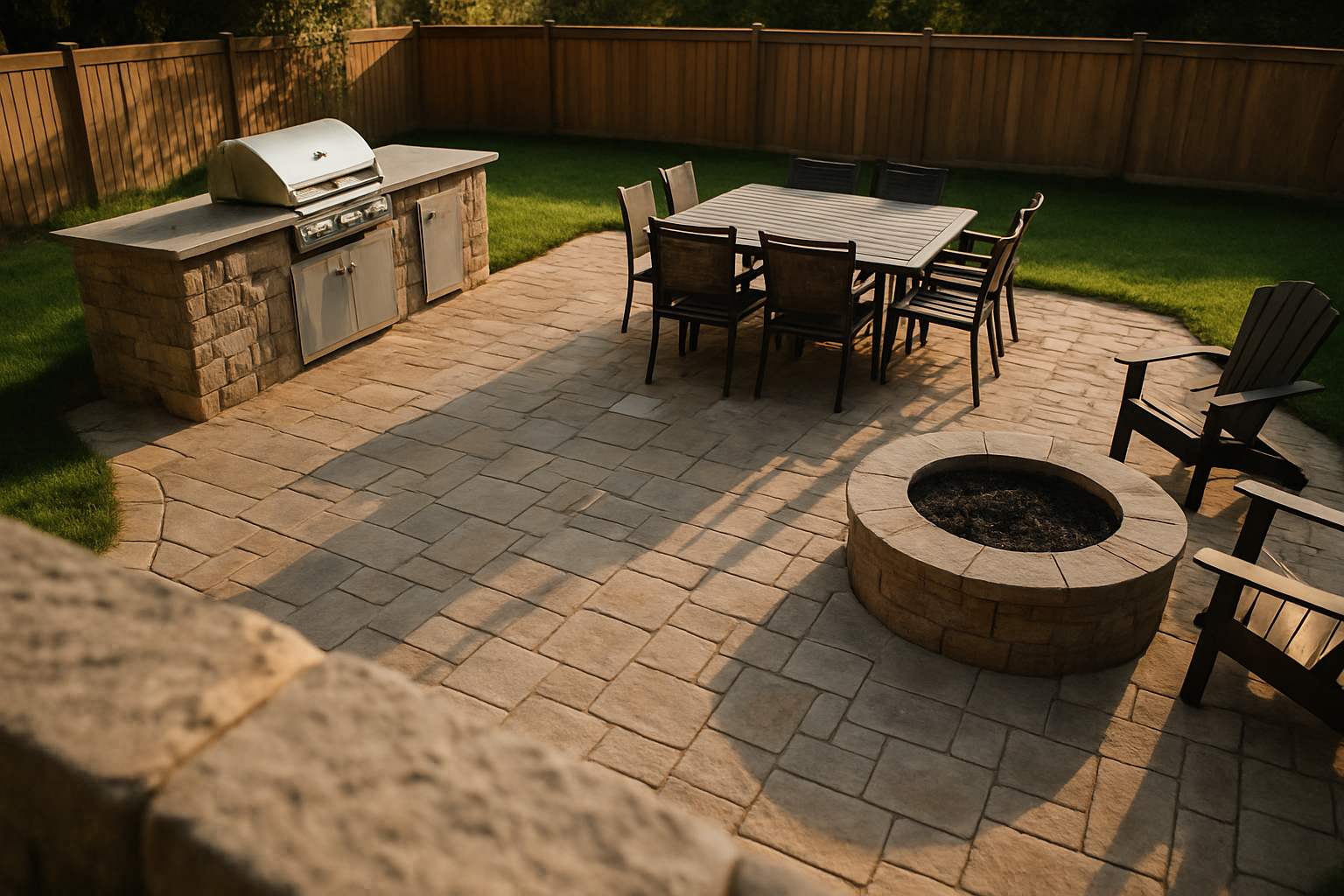
Hardscaping and outdoor kitchen projects are high-consideration purchases. A homeowner spending $35,000 on a stone patio with a built-in grill station and firepit is not making an impulse decision. They are comparing contractors on three dimensions: quality of work, personality fit, and responsiveness. The third factor is the one most contractors ignore.
Research from Harvard Business Review found that companies are 21 times more likely to qualify a lead when they respond within five minutes versus 30 minutes. For hardscape estimates, the same principle applies at a different timescale. The contractor who follows up consistently across SMS, email, and phone over the two weeks after the estimate closes far more projects than the contractor who sends one email and waits.
The after-hours problem compounds everything. A homeowner researching outdoor living projects is doing that research in the evenings, after kids are in bed, browsing Instagram Reels of outdoor kitchen builds and submitting inquiry forms at 9pm. If your business does not respond until the next business day, that lead has already emailed three other contractors and called two of them.
According to CallRail, 28% of business calls go unanswered and 85% of callers who reach voicemail will not leave a message and will not call back. Those callers move on. For a hardscape contractor whose average job is $35,000, each one of those lost leads represents a massive revenue miss.
How Outdoor Kitchen Leads Actually Behave
Understanding how your potential clients move through the decision process helps explain where the follow-up breakdowns happen. Most outdoor kitchen inquiries follow a predictable path.
Phase 1: Research and Shortlisting (2-4 Weeks Before Contact)
Homeowners spend weeks on Instagram, Houzz, and Pinterest building a vision before they ever contact a contractor. By the time they reach out to you, they know roughly what they want and have a general budget in mind. They're contacting 3-5 contractors simultaneously, not sequentially.
Phase 2: Estimate and Design Consultation (1-2 Weeks)
During this phase, they're evaluating you as much as your proposal. The homeowner who seemed enthusiastic during the estimate walkthrough is now quiet. They received four other proposals. They're comparing material options, timelines, and contractor personalities. Your follow-up during this phase is the single variable most within your control.
Phase 3: Decision (Often Quiet)
Most contractors don't know a client has signed with someone else until they reach out weeks later and get a polite "we went a different direction." By then, the project is already under contract with a competitor who simply followed up more consistently.
| Contractor Behavior | Outcome |
|---|---|
| Responds same day, follows up 3+ times | High close rate, books the project |
| Responds next business day, one follow-up | Moderate close rate, loses 40-60% of leads |
| Slow response, no follow-up system | Low close rate, loses most leads to faster competitors |
| After-hours inquiry, no response until next day | Lead contacts 2-3 other contractors before morning |
What Consistent Follow-Up Looks Like for a Hardscape Contractor
Winning more outdoor kitchen and hardscape projects doesn't require a sales team or a full-time office coordinator. It requires a system that handles the communication that contractors consistently drop.
The foundation is speed. When a lead comes in through your website, Google Business Profile, Instagram, or a phone call, the first response needs to happen within 60 seconds. Not next morning. Not an hour later. Within 60 seconds. InsideSales research shows that 78% of leads go to the first responder. In a market where homeowners are contacting multiple contractors at once, being first is not a courtesy, it's a competitive advantage.
After the first contact, a structured follow-up sequence keeps the relationship alive through the decision phase. This means a text check-in two days after the estimate, an email three days later with a project photo or material option, another text at the one-week mark, and a final outreach at two weeks. Most contractors drop off after one touch. A contractor who makes five touches over two weeks wins the project at a rate that's dramatically higher, even if their price is similar to competitors.
For a complete breakdown of how multi-channel follow-up works, see How Multi-Channel Follow-Up Helps Contractors Win More Bids.
How AI Handles Outdoor Kitchen Lead Capture Automatically
Setting up this follow-up system manually is hard to sustain. Contractors are busy. When the spring rush hits and your crews are booked out, the last thing you have time for is manually texting 15 homeowners who are in the estimate phase. That's where AI-powered follow-up changes the math.
An AI receptionist like Zoey responds to every inbound lead within 60 seconds, regardless of when the inquiry comes in. A homeowner who submits a contact form at 10pm on a Sunday gets a personalized text response within a minute. The AI collects project details: the type of outdoor space they want, whether they want an outdoor kitchen, pergola, firepit, or full hardscape, their budget range, their timeline, and the best time for an in-person consultation.
After the initial capture, the system runs the follow-up sequence automatically. Each message is sent at the right interval with the right content. The contractor reviews the CRM to see where each lead stands, sees the full conversation history, and can jump in personally when a lead is ready to sign. The manual labor of chasing leads is handled by the system. The contractor's time goes toward estimates and building relationships, not sending check-in texts that too often get forgotten.
To see how this compares to hiring staff to handle the same work, read AI Receptionist vs Hiring Staff: What's Right for Your Contractor Business.
A Real Scenario: Hardscape Contractor During Spring Rush
Here's a specific example. A hardscaping contractor in Phoenix runs a four-crew operation specializing in outdoor kitchens and large patio projects. Average project value: $38,000. In March, they received 22 new inquiries through their website and Google Business Profile. Without a follow-up system, 8 of those inquiries were after-hours and got no response until the next morning. Of those 8, 5 had already called at least one other contractor by the time the owner reached out.
After implementing AI-powered lead capture, the same contractor received 19 inquiries the following March. Every single one, including the 7 after-hours contacts, received a response within 60 seconds. The AI collected project details, answered basic questions about materials and timelines, and booked consultation appointments for 12 of the 19 leads. The conversion rate from inquiry to consultation went from 52% to 72%. At an average project value of $38,000, that improvement translated to three additional signed projects totaling roughly $114,000 in revenue that spring.
The only thing that changed was the response time and the consistency of follow-up. The crews, the pricing, and the quality of work stayed identical. Speed and consistency of communication were the variable.
Ready to Capture Every Spring Lead Before Your Competitors Do?
Book a free strategy call and see exactly how AI follow-up works for outdoor kitchen and hardscape contractors. No long-term contracts. Up and running in 7-14 days.
Book Your Free Strategy CallWhat to Look for in a Follow-Up System for Hardscape Contractors
Not all CRM and follow-up tools are built with outdoor kitchen and hardscaping contractors in mind. Here's what matters for your specific business.
Multi-channel coverage: Your leads come through Google, Instagram, Facebook, your website, and direct calls. A follow-up system that only handles one channel misses the rest. You need SMS, email, and call response all working together.
Customizable intake questions: Hardscape projects require qualifying questions that are specific to the trade. What's the scope, outdoor kitchen only or full patio build? What materials are they considering? What's their timeline? The system should ask your questions, not generic ones.
Automated follow-up sequences: The system should automatically send follow-ups at pre-set intervals after the initial inquiry. Not just one message, but a series that runs across the decision timeline without requiring manual input from you.
CRM pipeline visibility: Every lead should be trackable at a glance. Where is each homeowner in the decision process? When did they last respond? What did the AI say? That visibility tells you when to step in personally and when to let the automation run.
Calendar booking integration: The AI should book the in-person consultation directly to your calendar, not send a scheduling link that requires the homeowner to take one more step. Every extra step reduces the conversion rate.
For a deeper look at why so many contractors miss this window, read Why Contractors Lose Estimates: The Follow-Up Problem Nobody Talks About. And for the specific mechanics of the 60-second response that wins jobs, see Why Contractors Need to Follow Up With Leads in 60 Seconds.
Frequently Asked Questions
Why do outdoor kitchen contractors lose projects after giving estimates?
Most outdoor kitchen projects require homeowners to compare 3-5 estimates across several weeks. Contractors who don't follow up consistently during that decision window lose to competitors who do. Research from HubSpot shows 80% of sales require five or more follow-up touches, but most contractors make only one or two, then assume the client went elsewhere.
How fast should a hardscaping contractor respond to a new lead?
Within 60 seconds of the inquiry. InsideSales research shows 78% of leads go to the first responder. When homeowners contact multiple contractors simultaneously, which most do, they schedule consultations with whichever contractors respond first. A next-day response is often too late to make the shortlist.
Can AI follow-up handle outdoor kitchen inquiries after hours?
Yes. An AI receptionist responds to every inquiry within 60 seconds regardless of time. Evening and weekend inquiries, which make up a large portion of home improvement research activity, are captured and responded to immediately. Without an AI system, those after-hours leads contact competitors by morning.
The Spring Rush Won't Wait for You to Get Organized
Outdoor kitchen contractors and hardscaping specialists do some of the most visible, high-value residential work in the trades. A well-built patio with an outdoor kitchen gets photographed, shared on social media, and generates referrals for years. The projects are worth winning. But you have to respond fast enough and follow up consistently enough to actually close them.
The contractors who dominate their market in spring aren't necessarily the best craftspeople. They're the ones with a system that captures every inquiry, responds in 60 seconds, and keeps the follow-up running until the contract is signed. That system is the difference between a full spring schedule and watching $35K projects go to competitors.
Don't Let Another Spring Lead Go to a Faster Competitor
Book a free strategy call to see how AI lead capture and automated follow-up helps outdoor kitchen and hardscape contractors fill their spring calendar without adding staff.
Book Your Free Strategy Call