Tree Service Companies: Capture Storm Season Leads Fast
Quick Answer
Tree service companies lose storm season leads because 50 homeowners call simultaneously and only 3 get answered. AI lead capture responds to every missed call and web inquiry in under a minute, qualifies the job, and books it to your schedule - so you capture leads your competitors never even see.
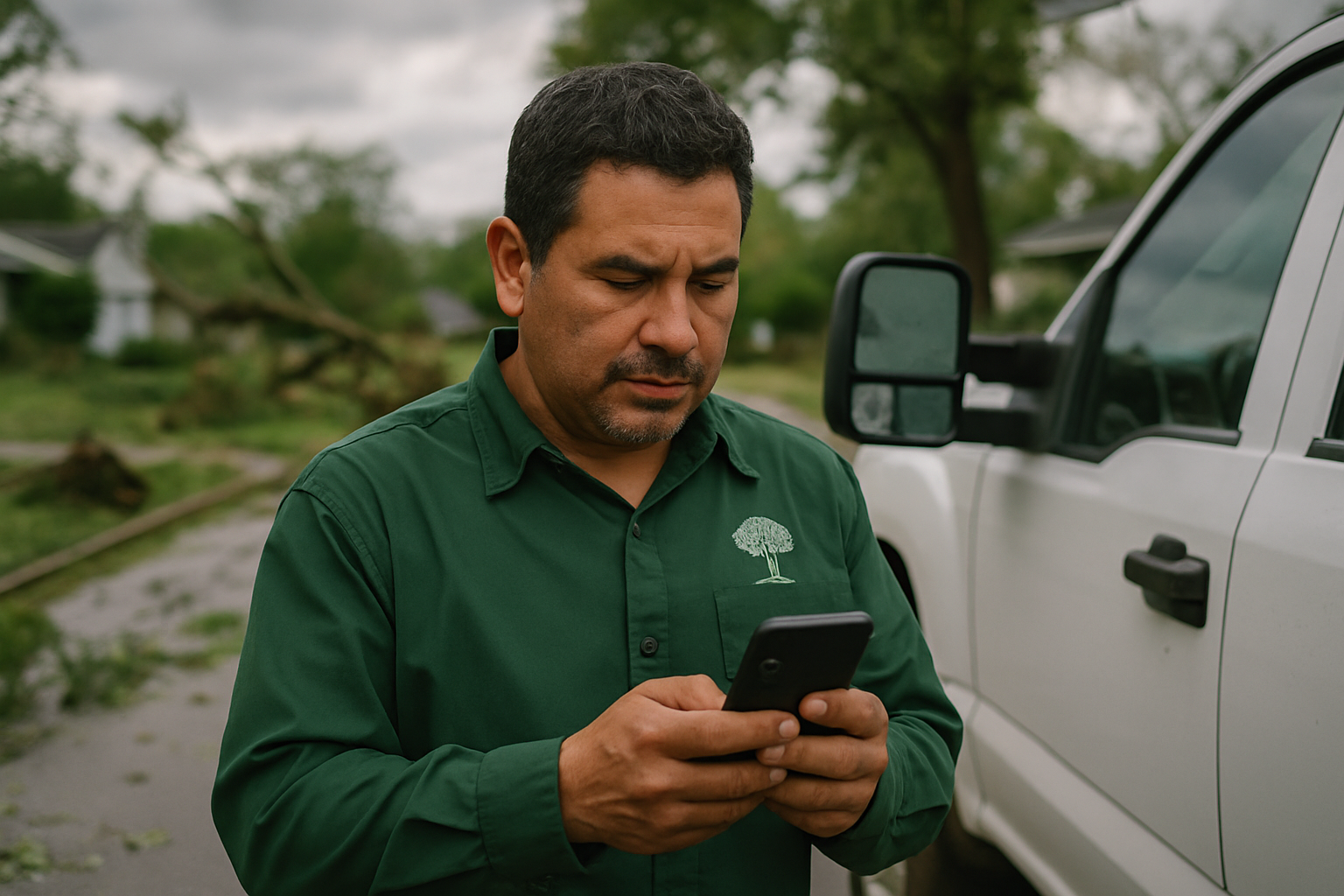
A storm rolls through on a Thursday night and by Friday morning, your phone is ringing every three minutes. A oak tree fell across a fence in one neighborhood. A pine limb punched through a garage roof two streets over. Every homeowner in a ten-mile radius is calling tree service companies - and they're calling three or four at once. Tree service storm season leads are the highest-value opportunities your business will see all year, and most tree service companies lose half of them before 9am on day one.
The crew that was going to answer calls is on-site clearing a fallen tree. You're coordinating a second crew across town. Your office line is ringing, your cell is ringing, and three more voicemails just stacked up. By the time anyone gets back to those callers, they've already booked with whoever responded first.
Why Storm Season Is the Most Dangerous Time for Lead Loss
Storm season is the single highest-revenue period for tree service companies - and simultaneously the moment when you're least able to respond to new leads. Your crews are maxed out. Emergency jobs take priority. Nobody has time to sit by a phone managing inquiries while a 40-foot oak needs to come down three blocks away.
The problem is that storm leads don't wait. Research from InsideSales shows 78% of leads go to the first company that responds. In tree service, that window is even tighter because homeowners have real urgency - a tree on their roof isn't something they'll think about for a week. They need someone out within 24 to 48 hours and they're calling until they find a company that picks up.
According to CallRail, 28% of business calls go unanswered under normal conditions. During a storm surge, that number jumps dramatically - because the same event that creates the leads also puts your entire crew in the field with no one managing incoming calls.
A single missed storm job at $2,500 to $8,000 for emergency tree removal is painful. Multiply that by the 15 to 30 calls you don't get to during a busy storm day and you're looking at $40,000 to $200,000 in a single afternoon walking to competitors who had a better system.
The Storm Lead Window: How Narrow It Really Is
Here's what the timeline looks like from a homeowner's perspective after a storm drops a tree on their property:
- 0-15 minutes: Assess damage, take photos, start searching for tree service companies
- 15-30 minutes: Call 3-5 companies, leave voicemails or speak to whoever answers
- 30-60 minutes: Book with the first company that confirmed availability and gave a rough estimate
- 60+ minutes: Lead is gone. They're scheduling the job, not taking calls from late responders.
That 30-to-60-minute booking window is the entire game. If you're not in the conversation within that timeframe, the job is not yours - regardless of your reputation, your reviews, or your pricing.
According to Harvard Business Review, the odds of reaching a lead drop by over 90% after the first hour. For emergency tree service, the dropoff is even steeper - homeowners move on fast when they have a tree on their house.
What Winning Tree Service Companies Do Before Storm Season Hits
The tree service businesses that capture the most storm leads don't do it by hiring more office staff for storm season. They build automated systems that handle lead intake when the phones are overwhelmed.
Automated Missed Call Text-Back
When a call goes unanswered - which happens constantly during a storm surge - an automated text goes out within 60 seconds. Something specific: "Hey, this is [Your Company]. We saw you called - what's the tree situation and what's the address? We'll get back to you with availability." That message holds the homeowner in conversation with you instead of calling the next number.
AI Qualification and Booking
Zoey handles the two-way conversation from there. She asks about the tree - species, approximate size, where it fell, whether there's structural damage, urgency level. She collects the address and contact information. And she either books a same-day or next-day assessment directly to your schedule, or flags high-urgency jobs for immediate callback by your team. Your crew gets a prioritized, organized list of jobs instead of a pile of voicemails.
24/7 Coverage for After-Hours Storm Calls
Storms don't follow business hours. A homeowner who wakes up at 3am to find a tree on their roof is not going to wait until 8am to start calling. With AI coverage running overnight, that homeowner gets an immediate response, their job gets logged, and your crew wakes up to a confirmed schedule for the morning - including emergency jobs that came in while everyone was asleep.
Stop Losing Storm Season Jobs to Whoever Answers First
Zoey captures every tree service inquiry - even when your crew is 30 feet up in someone's yard - responds in under 60 seconds, and books jobs to your schedule automatically.
Book Your Free Strategy CallStorm Season Lead Volume: What to Expect and Prepare For
Understanding the call volume spike helps you build the right system ahead of time. Here's how storm events typically affect lead volume for tree service companies:
| Storm Type | Typical Lead Spike | Window to Book | Avg Job Value |
|---|---|---|---|
| Thunderstorm / high winds | 3x-5x normal volume | 30-60 minutes | $800-$3,000 |
| Ice storm / heavy snow load | 5x-8x normal volume | 1-4 hours | $1,500-$5,000 |
| Hurricane / tropical storm | 10x-20x normal volume | Hours to days | $2,500-$15,000+ |
| Tornado / severe weather | 20x+ normal volume | Sustained 3-7 days | $5,000-$25,000+ |
The hurricane and severe weather scenarios are where automated systems pay for themselves many times over in a single event. A tree service company that captures 70% of incoming leads during a major storm event instead of 30% can see a difference of $200,000 to $500,000 in a single week.
For more on how emergency service businesses manage call surges, see After-Hours Lead Capture for Service Businesses: What Works.
Off-Season: The Leads You're Losing Without a Storm
Storm season gets the attention, but tree service companies lose leads year-round to the same response time problem. Routine tree trimming jobs, diseased tree removal, stump grinding, and land clearing inquiries all come in through web forms, Google Business Profile, and missed calls - and they all follow the same pattern: homeowners compare two or three companies and book with whoever responds first.
The company that built an automated response system for storm season also captures those routine $1,500 to $4,000 jobs during slow months. The infrastructure works in both directions. And because Zoey is running conversations 24/7, you're capturing the homeowner who researched tree trimming at 10pm on a Sunday - a lead most tree service companies will never know they lost.
According to Salesforce, 64% of consumers expect real-time responses from businesses. For tree service companies, that expectation translates directly to booking behavior: the company that feels immediately responsive gets the job. The one that calls back next morning doesn't.
For more on building a lead response system that works year-round, see The Real Cost of a Missed Call for Contractors.
Frequently Asked Questions
How do tree service companies lose storm season leads?
Storm events flood phones simultaneously while crews are in the field. Unanswered calls go to competitors. Homeowners with damaged trees book within 30 to 60 minutes of reaching out - if a tree service company doesn't respond in that window, the job goes to whoever answered first.
What is the best way for tree service companies to capture storm leads?
Automated missed call text-back combined with AI lead qualification. When a call goes unanswered, an automated system texts the homeowner within 60 seconds, collects job details, and books the assessment to the schedule. This works during storms when the entire crew is unavailable.
How much revenue do tree service companies lose per storm event?
A mid-size tree service company handling 50 to 100 storm calls in a single event and missing 40 to 50% of them loses $40,000 to $200,000 per storm event. Hurricane-level events with sustained lead volume can result in $200,000 to $500,000 or more in missed revenue over 3 to 7 days.
Should a tree service company prepare for storm season before it starts?
Yes. AI lead capture and automated response systems should be set up and tested before storm season, not during. During an active storm event there's no time to configure tools. Companies that prepare in advance capture significantly more leads when the volume spike hits.
Build the System Before the Next Storm Arrives
Tree service storm season leads are some of the most valuable opportunities in the trades - high urgency, fast decisions, and homeowners actively looking to book. The companies that capture the most of those leads aren't the ones with the best equipment or the lowest prices. They're the ones whose systems respond first.
Setting up automated lead response before storm season is the single highest-ROI thing a tree service company can do in the spring. One major storm event with the right system in place can recover the entire year's investment in a weekend.
Get Your Storm Season Lead System Running Before the Next Storm
Book a free strategy call and see how Zoey handles storm surge lead volume - responding to every missed call in under a minute, qualifying jobs, and filling your schedule before your competitors even get off the job site.
Book Your Free Strategy Call