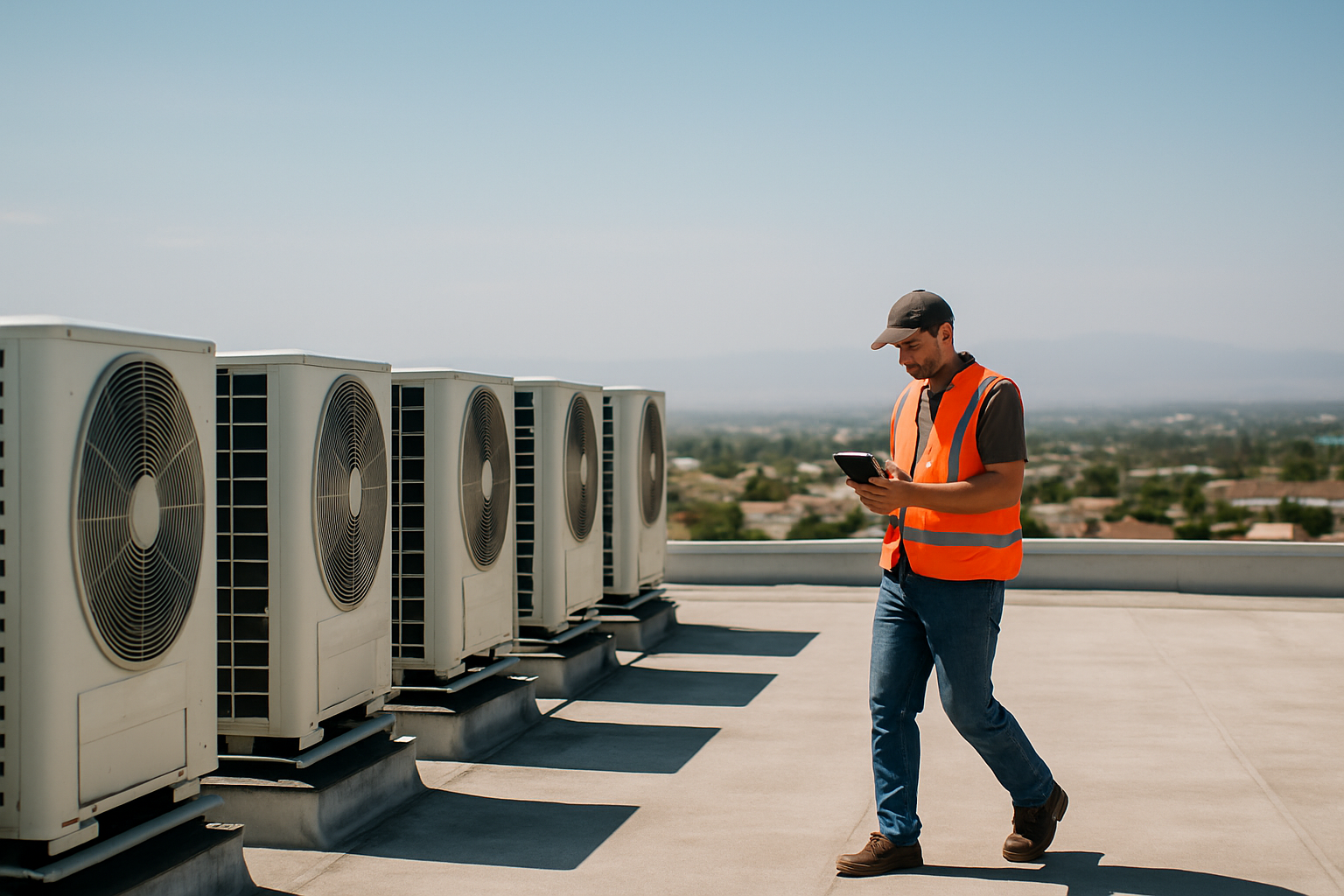
Corona, CA HVAC Contractors: Stop Losing Jobs to Missed Calls
Quick Answer
Corona CA HVAC contractors lose high-value replacement jobs every summer because techs are in the field when homeowners call. According to CallRail, 28% of business calls go unanswered and 85% of those callers never leave a voicemail. An AI-powered call response system recovers those leads automatically, even at 9pm in July.
When an AC unit fails in Corona, CA on a July afternoon at 105°F, the homeowner does not wait until morning. They grab their phone, search "HVAC contractor Corona CA," and start calling. They will call four or five companies. The first one to answer gets the job - which in summer 2026 means a $12,000 to $20,000 system replacement. Every company that goes to voicemail loses that revenue permanently.
This is the Corona CA HVAC missed call problem, and it is one of the most expensive gaps in any local HVAC operation. Your techs are on rooftops and in attics all day. They cannot answer every call. But the calls keep coming - and the homeowners keep moving to the next number on their list.
Why Corona, CA Creates the Highest-Stakes HVAC Call Environment in Southern California
The Inland Empire is not Los Angeles coastal. Corona sits inland where summer temperatures routinely exceed 105°F from late May through September. That heat is not just uncomfortable - it is dangerous for elderly residents, infants, and anyone with respiratory conditions. When a system fails in those conditions, the homeowner is in crisis mode, not shopping mode.
That urgency changes the sales dynamic entirely. In a non-emergency situation, a homeowner might leave a voicemail and wait for a callback. In a heat emergency at 7pm on a Tuesday, they will not leave a voicemail. They will call the next company on the list. According to CallRail's 2024 call analytics data, 85% of callers who reach voicemail will not leave a message and will not call back. They move on.
Corona's residential growth compounds this further. The city has added tens of thousands of new homes over the past decade - homes with aging HVAC systems from original construction, homes that need replacements on the same hot summer days when every HVAC shop in the Inland Empire is stretched thin. That volume is not a problem you can hire your way out of.
The Math Behind HVAC Missed Calls in the Inland Empire
The numbers are not abstract. If your Corona HVAC business receives 30 inbound calls per week during peak season - a conservative estimate for an active shop - and 28% go unanswered (the CallRail industry average), that is roughly 8 to 9 missed calls per week. Not every missed call is a replacement job, but if even 30% of them represent jobs in the $8,000 to $18,000 range, the weekly revenue exposure is significant.
Run the math over a 16-week peak season from May through August:
| Metric | Conservative | Active Shop |
|---|---|---|
| Weekly inbound calls (peak) | 20 | 40 |
| Missed calls (28% - CallRail) | 5-6/week | 11/week |
| Callers who move on (85% - CallRail) | 4-5/week | 9-10/week |
| Replacement jobs (30% of missed) | 1-2/week | 3/week |
| Avg replacement value | $12,000 | $15,000 |
| Peak season revenue lost (16 wks) | $192,000-$384,000 | $720,000+ |
Rockitgo Digital's internal estimate puts average annual revenue lost to missed calls at $126K per contractor business. For an active Corona HVAC operation during a full Inland Empire summer, that number is likely higher.
Why HVAC Contractors Are Uniquely Exposed to the Missed Call Problem
Most businesses have someone at a desk who can answer phones during the day. HVAC contractors are different. Your best lead is calling while your tech is under a house on a 90-minute service call with no cell signal. Or while your dispatcher is coordinating three emergency calls at once. Or at 8pm when the office is closed but the homeowner's system just failed.
The timing mismatch is structural. Residential HVAC emergencies happen when it is hottest - afternoon and evening. That is also when your field team is at maximum busyness and minimum availability. The calls flood in exactly when you are least equipped to answer them.
Research from Harvard Business Review found that companies responding to leads within 5 minutes are 21 times more likely to qualify that lead than those responding 30 minutes later. In a heat emergency where a homeowner is calling five companies, 30 minutes means they have already hired one of your competitors. This is the window where Corona HVAC jobs are won or lost.
For a broader look at this problem, see how HVAC companies lose leads to missed calls across the industry.
What Happens When a Homeowner in Corona Gets No Answer
Put yourself in the homeowner's position. It is 7:30pm. The thermostat reads 84°F inside. You have two kids under 10 and an elderly parent staying with you. The AC is dead. You search Google, find four HVAC companies with good reviews in Corona, and start calling.
Company A: rings four times, voicemail.
Company B: picks up immediately, asks three quick questions, says a tech can be there by 9pm and will call ahead.
Company C and D: you never call.
Company B just booked a service call that will likely become a $14,000 full system replacement the next morning. Company A, which had better reviews and arguably a better reputation, got nothing. Not because they are a worse HVAC shop - because they did not answer the phone at 7:30pm on a Tuesday.
That is the entire problem. It is not a quality problem or a pricing problem. It is a response-time problem.
The After-Hours Lead Window: Where Corona HVAC Revenue Is Won or Lost
Industry data consistently shows that HVAC calls do not follow a 9-to-5 schedule. Calls spike between 5pm and 9pm on weekdays - when homeowners get home and realize the AC they thought was "maybe a little warm" is actually a full failure. Weekends are equally high-volume, especially Saturdays when homeowners have time to deal with a problem they noticed during the week.
Most Corona HVAC shops have some after-hours coverage, but it is inconsistent. An on-call tech might answer, or might not. The office answering service might pick up, or the homeowner might hit a generic voicemail. Either way, the conversion rate on after-hours calls for HVAC businesses without a dedicated lead capture system is dramatically lower than during business hours.
This is where commercial HVAC operations face an even bigger problem. A commercial property manager calling about a failed rooftop unit on a Friday evening is deciding between vendors for a $50,000 to $150,000 repair. For more on capturing those emergency leads, see how commercial HVAC businesses handle emergency lead capture.
Stop Losing Corona HVAC Jobs to Voicemail
Zoey responds to every missed call in under a minute, qualifies the lead, and books the service appointment - even at 9pm in July. See how it works for your HVAC business.
Book Your Free Strategy CallHow AI Lead Capture Works for HVAC Contractors
The solution to the missed call problem is not hiring more office staff - that does not fix after-hours coverage and does not scale during a storm spike. The fix is an automated system that responds to every missed call within 60 seconds, regardless of when it comes in.
Here is the workflow:
Step 1: Call Is Missed
A homeowner calls your Corona HVAC line at 8pm. Your dispatcher has gone home. The call rings through and goes unanswered. Without automation, this lead is gone. With an AI system like Zoey, the response starts immediately.
Step 2: SMS Response in Under 60 Seconds
Within under a minute of the missed call, the homeowner receives a text from your business number. Something like: "Hi, this is [Your Company], sorry we missed your call. Can you tell me what's going on with your HVAC system?" The homeowner is still on their couch, phone in hand. They respond.
Step 3: Automated Qualification Conversation
The AI holds a real two-way SMS conversation. It asks about the issue (no cooling, no heat, making noise), the system type, the property address, and whether there are any urgent comfort or safety concerns. It qualifies the lead without needing a human involved. All responses are logged in the CRM (customer relationship management system - the software that tracks your leads and jobs).
Step 4: Appointment Booked Directly to Calendar
For service calls and estimates, the AI books the appointment directly into your team's calendar and sends the homeowner a confirmation. By the time your dispatcher arrives the next morning - or sees the notification that night - there is a booked appointment waiting, not a vague voicemail to decode.
This same workflow applies across all inbound channels. Website chat, Facebook messages, Instagram DMs, and inbound form submissions all feed into the same response pipeline. A homeowner who finds you through any channel gets the same under-60-second response experience.
For a detailed breakdown of how this system works across all types of service businesses, read about after-hours lead capture for service businesses.
HVAC Lead Capture: What Changes When You Close the Gap
HVAC contractors who implement automated lead response systems report two consistent changes. First, they stop hearing "we already called someone else" when they follow up the next morning. Second, their emergency call volume feels more manageable because fewer leads are slipping through to competitors.
The Salesforce State of the Connected Customer report found that 64% of consumers now expect real-time response from businesses, even outside of business hours. In the HVAC context, that expectation is even higher during an emergency. A homeowner who gets a text back at 8:15pm - even if the tech cannot arrive until the next morning - feels taken care of. They are no longer calling your competitor.
That psychological shift is the real value of fast response. You do not need to solve the problem immediately to win the customer. You need to acknowledge them first. The contractor who acknowledges first wins the job almost every time.
Comparing Lead Response Options for Corona HVAC Shops
| Option | Coverage Hours | Response Time | Surge Handling | Monthly Cost |
|---|---|---|---|---|
| Office staff only | Business hours | Varies (1-30 min) | Limited (1 at a time) | $4,500-$6,000/mo salary |
| Answering service | 24/7 (message taking) | Message passed by AM | Yes but no qualification | $200-$500/mo |
| On-call tech | After hours (inconsistent) | 5-20+ min | No (one at a time) | Variable + overtime |
| AI lead response (Zoey) | 24/7/365 | Under 60 seconds | Unlimited simultaneous | Flat rate, no per-call spike |
The answering service comparison deserves a note: traditional answering services take a message and pass it along in the morning. That is too slow. A lead that called at 8pm and is woken up at 8am by your return call has already had a tech at their house by that point. The speed gap is the entire problem.
Frequently Asked Questions About HVAC Missed Calls in Corona, CA
Why do HVAC contractors in Corona lose so many leads to missed calls?
The problem is structural: techs are in the field during the exact hours homeowners call most. Inland Empire summer heat creates emergency conditions where a homeowner will call multiple companies in rapid succession. The first to respond gets the job. Any company that goes to voicemail is eliminated from consideration - CallRail data shows 85% of those callers will not leave a message or call back.
How much revenue is actually at risk for a Corona HVAC shop?
At 28% missed call rate on a peak-season call volume of 30 to 40 weekly calls, a Corona HVAC business can lose 8 to 11 potential leads per week. With replacement jobs at $12,000 to $20,000 each, even converting half those missed leads would add several hundred thousand in annual revenue. Rockitgo Digital's baseline estimate is $126K per year in average missed-call revenue loss.
What response time do I actually need to compete in the Inland Empire HVAC market?
Under 5 minutes is the threshold that matters. Harvard Business Review research showed a 21x conversion advantage at 5 minutes versus 30 minutes. During a 105°F heat emergency in Corona, homeowners are not waiting 30 minutes. Realistically, the window is closer to 5 to 10 minutes before the next company on their list picks up and wins the job.
Is an AI system better than an after-hours answering service for HVAC?
Traditional answering services take a message and deliver it the next morning - too slow for emergency HVAC calls. An AI response system like Zoey fires an SMS within 60 seconds of a missed call, qualifies the job scope in real time, and books the appointment automatically. By the time a human answering service would be calling you in the morning, Zoey has already captured the lead and added the appointment to your calendar.
How Corona HVAC Contractors Can Stop Losing Jobs This Summer
The Inland Empire HVAC season is unforgiving. Demand spikes hard in May and does not let up until October. During that window, the contractors who capture the most leads are not necessarily the best HVAC shops. They are the ones with the best response systems.
The goal is simple: every caller who cannot reach you live should get a response in under 60 seconds through another channel - SMS, chat, or voice. Not a "we'll call you back" message, but a real qualification conversation that moves toward a booked appointment.
Zoey, Rockitgo Digital's AI sales assistant, does exactly that. It responds to missed calls around the clock, holds qualification conversations via SMS, books appointments directly to your calendar, and logs everything in your CRM. No per-call billing spikes during storm surges. No coverage gaps on weekends or holidays. No leads falling through at 9pm because your dispatcher went home.
For a broader look at how this fits into a complete lead capture strategy for service businesses, see the guide on after-hours lead capture for service businesses.
Ready to Capture Every HVAC Lead This Summer?
Book a free strategy call and see how Zoey handles after-hours calls for HVAC contractors in the Inland Empire. We'll walk through your current call volume, where leads are slipping, and what a response system looks like for your business specifically.
Book Your Free Strategy Call